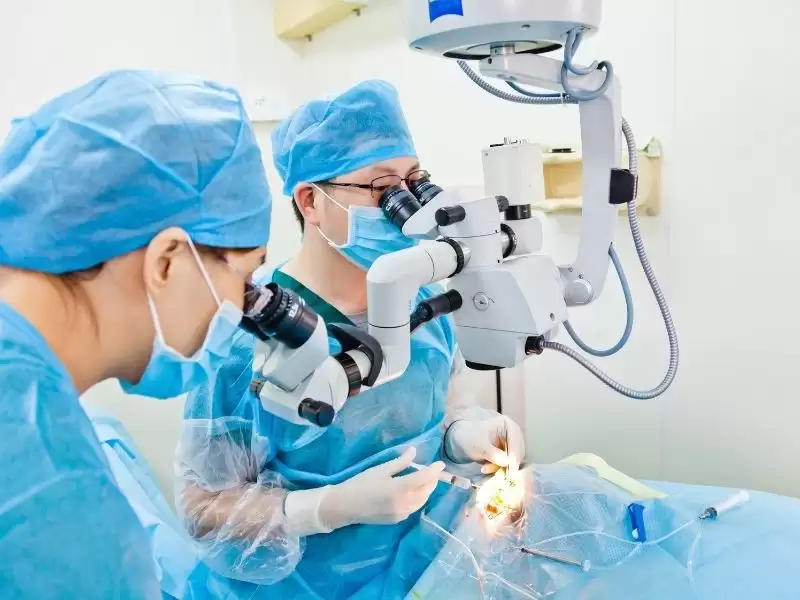
Robotic surgery for bladder cancer refers to performing radical cystectomy with robotic assistance in selected patients for whom complete removal of the bladder is considered necessary. The robot does not perform the operation on its own; the camera and surgical instruments are controlled by the surgeon at the console.
During the operation, surrounding tissues and lymph nodes in the pelvic region may be removed together with the bladder, depending on the condition of the disease. After the bladder is removed, a new urinary pathway is created so that urine produced by the kidneys can be eliminated from the body.
The robotic approach is not used for every bladder tumor. The stage of bladder cancer, pathology results, the patient’s overall health, and other available methods are evaluated together. In patients who require radical cystectomy, robotic and open surgery options are also compared on an individual basis.
- Robotic Surgery for Bladder Cancer at a Glance
- When Is Robotic Radical Cystectomy Considered?
- Difference Between Superficial and Muscle-Invasive Bladder Cancer
- How Is Robotic Bladder Cancer Surgery Performed?
- Removal of the Bladder and Surrounding Tissues
- Pelvic Lymph Node Dissection
- Creation of the Urinary Diversion
- How Is Urine Eliminated After the Bladder Is Removed?
- Orthotopic Neobladder
- Ileal Conduit and Stoma
- Ureterocutaneostomy
- Neobladder or Ileal Conduit?
- Differences Between Robotic and Open Radical Cystectomy
- Advantages of Robotic Surgery
- How Is Suitability for Robotic Surgery Evaluated?
- Preparation Before Robotic Cystectomy
- Robotic Surgery in Ankara
- Frequently Asked Questions About Robotic Surgery for Bladder Cancer

Robotic Surgery for Bladder Cancer at a Glance
Robotic surgery is most commonly used for cystectomy, an operation in which the bladder is completely removed.
The surgeon performing the operation controls the robotic system and all surgical movements.
When the bladder is removed, a new pathway is created to allow urine to leave the body.
Suitability for the robotic approach is determined according to the stage of the cancer and the patient’s overall condition.
When Is Robotic Radical Cystectomy Considered?
Radical cystectomy is an extensive cancer operation in which the bladder is removed together with some surrounding tissues and the necessary lymph nodes. It is generally considered in bladder cancer that has invaded the muscle layer.
This operation may be considered in the following situations:
Tumors that have invaded the bladder muscle layer
Superficial tumors carrying a very high risk of progression
Selected patients who do not respond to treatments administered into the bladder
High-grade tumors that recur frequently and cannot be controlled within the bladder
Cases in which bladder-preserving approaches are not suitable
Some patients who do not achieve an adequate response after bladder-preserving treatment
In stage II and III bladder cancers, radical cystectomy and a bladder-preserving approach based on concurrent chemotherapy and radiotherapy may be among the main options. Removal of the bladder may also be considered for certain very high-risk non-muscle-invasive tumors that do not respond to intravesical treatments.
The decision to operate is not made solely on the basis of computed tomography or magnetic resonance imaging results. The pathology report, tumor grade, muscle layer involvement, lymph nodes, distant organs, kidney function, and the patient’s overall performance status are evaluated together.
Difference Between Superficial and Muscle-Invasive Bladder Cancer
Non-muscle-invasive bladder cancer is a group of diseases in which the tumor has not reached the bladder muscle layer. During the initial evaluation of these tumors, transurethral resection of the bladder tumor, performed through the urinary tract and abbreviated as TUR-M, is generally used.
Muscle-invasive bladder cancer means that the tumor has progressed into the muscle layer of the bladder. In this situation, removing the disease only from inside the bladder may not be sufficient, and radical cystectomy or combined bladder-preserving treatments in suitable patients may be considered.
TUR-M and radical cystectomy are not the same operation. In TUR-M, the tumor is removed from inside the bladder, whereas in radical cystectomy the entire bladder is removed and a new urinary pathway is created.
How Is Robotic Bladder Cancer Surgery Performed?
When a bladder cancer surgery is planned, the surgical stages are determined according to the extent of the disease, the patient’s anatomy, and the selected urinary diversion method.
Robotic surgery generally consists of the following stages:
The patient’s pathology and imaging results are evaluated.
Anesthesia preparation is completed, and the patient is placed in the appropriate position.
Small access points are created in the abdominal area for the camera and instruments.
The robotic arms are placed through these access points.
The bladder is carefully separated from the surrounding vessels and tissues.
Surrounding organs or tissues are evaluated according to the surgical plan.
The necessary lymph nodes in the pelvic region are removed.
The bladder is removed from the body.
A new urinary pathway is created using the selected method.
The surgical access points are closed.

The number of incisions, duration of the operation, and the section of bowel to be used are not the same for every patient. The procedure performed with the robotic system may include not only removal of the bladder but also reconstruction of the urinary tract.
Removal of the Bladder and Surrounding Tissues
Removal of the bladder is the process of separating the organ containing the tumor from the surrounding tissues and removing it from the body. The tissues removed during radical cystectomy may differ between female and male patients.
In men, the surgical plan may include the prostate and seminal vesicles. In women, the uterus, ovaries, or part of the vagina may be evaluated for removal. However, the extent of the structures to be removed is determined according to the location and spread of the tumor and suitability for organ-preserving surgery.
Preservation of sexual function or reproductive organs is not possible for every patient. Whether organ-preserving surgery can be performed without compromising cancer control is decided on the basis of preoperative findings and the assessment made during the operation.
Pelvic Lymph Node Dissection
Pelvic lymph node dissection is the removal of specific lymph nodes around the bladder and their submission for pathological examination. This procedure may help determine the true stage of the disease and guide the subsequent treatment plan.
Lymph node dissection is not specific to the robotic approach. It may be performed as part of the surgical plan during both robotic and open radical cystectomy.
The extent of the lymph nodes to be removed varies according to the characteristics of the tumor, imaging findings, and surgical assessment.
Creation of the Urinary Diversion
After the bladder is removed, a new exit pathway is required for the urine that the kidneys continue to produce. This procedure is called urinary diversion.
Urinary diversion is the reconstructive stage of cystectomy. A segment of bowel may be used to create a conduit opening onto the abdominal wall or a new reservoir connected to the urethra.
The selected method is not determined solely by the patient’s personal preference. The location of the tumor, kidney and liver function, heart and lung capacity, manual dexterity, cognitive status, and long-term follow-up requirements are taken into account.
How Is Urine Eliminated After the Bladder Is Removed?
When the bladder is removed, different surgical options are available for storing urine or removing it from the body. The appropriate option is determined according to the characteristics of the patient and the tumor.
Orthotopic Neobladder
Neobladder is a urinary reservoir prepared from a specific segment of bowel. In suitable patients, this reservoir can be connected to the urethra, with the aim of allowing urine to leave the body through the natural urinary outlet.
The medical name of this method is orthotopic neobladder reconstruction. The created reservoir is not identical to the natural bladder. It does not contract on its own, and the patient may need to learn to empty urine at regular intervals by using the abdominal muscles and relaxing the pelvic floor.
The following factors are important when evaluating a patient for a neobladder:
Absence of cancer in the urethra
Adequate kidney and liver function
The patient’s ability to learn and apply the required techniques
Adherence to a regular follow-up program
Ability to use intermittent catheterization when necessary
Expectations regarding daytime and nighttime urinary control
The patient’s overall health and performance status
The presence of an invasive tumor in the urethra may rule out the orthotopic neobladder option. Severe kidney or liver dysfunction and certain neurological or cognitive conditions may also affect suitability for this method.
Ileal Conduit and Stoma
Ileal conduit is a urinary diversion method in which a short segment of the small intestine is used to direct urine from the kidneys to an opening in the abdominal wall. Urine exits through the opening created in the abdominal wall and collects in a special pouch attached to the skin.
This opening in the abdominal wall is called a stoma. An ileal conduit is one of the urinary diversion options that has been used for many years and whose function and follow-up requirements are well understood.
Using a pouch does not mean that this method is inadequate. In some patients, it may be preferred because it requires less learning, does not require the use of abdominal muscles to empty urine, and has certain technical planning advantages.
The stoma area must be cared for, the pouch must be changed regularly, and the skin must be protected. Therefore, it is important to plan the stoma site before surgery and inform the patient about its care.
Ureterocutaneostomy
Ureterocutaneostomy is the direct connection of the ureters, which carry urine from the kidneys, to the abdominal wall. Because a long conduit or reservoir is not created from the bowel, it is a surgically simpler diversion option.
This method may be considered especially in certain frail patients, patients with a solitary kidney, or those whose overall health is not suitable for extensive bowel surgery. However, it has its own follow-up requirements, including the risk of stomal stenosis and urinary tract infection.
Neobladder or Ileal Conduit?
The choice between a neobladder and an ileal conduit is not based solely on whether an external pouch will be used. The two methods have different characteristics in terms of daily life, follow-up, and patient adherence.
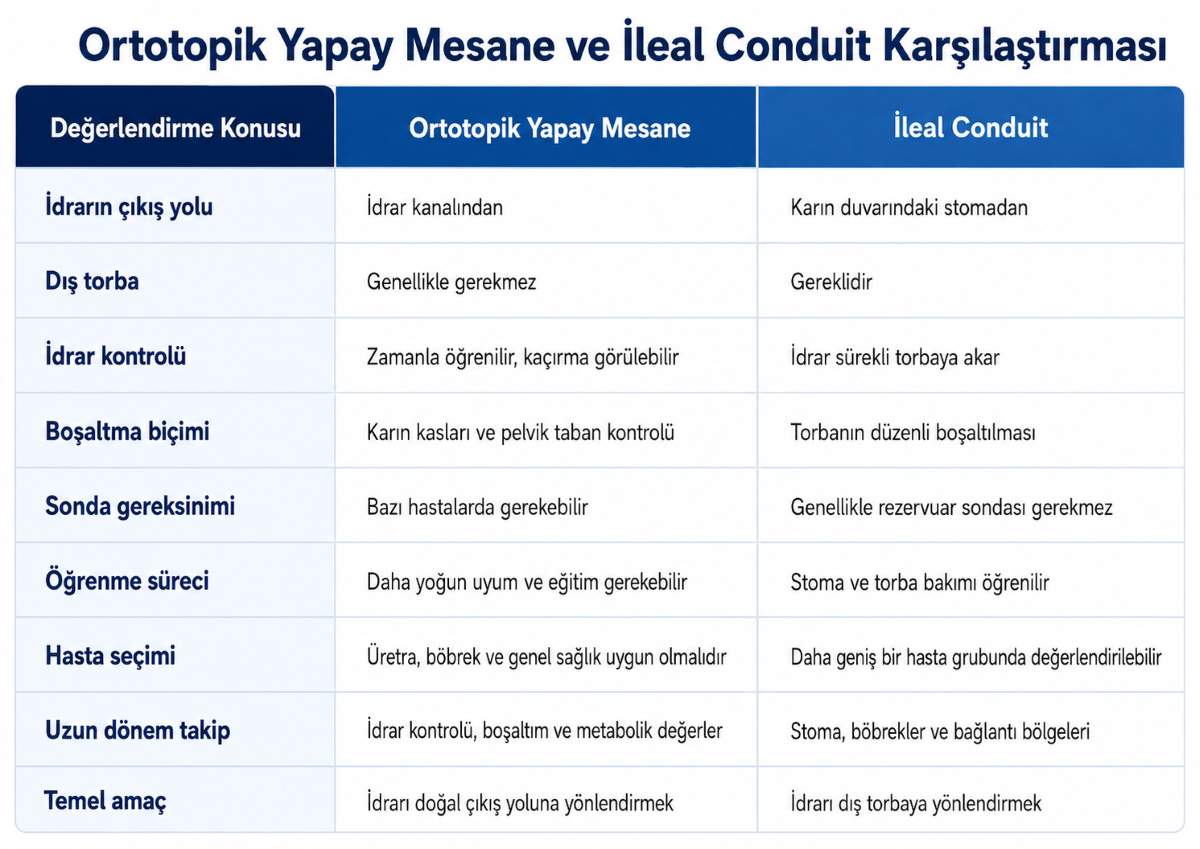
No single method can be described as more natural, easier, or better for all patients. Guidelines also state that there are insufficient comparative data to support recommending one type of diversion for every patient.
Differences Between Robotic and Open Radical Cystectomy
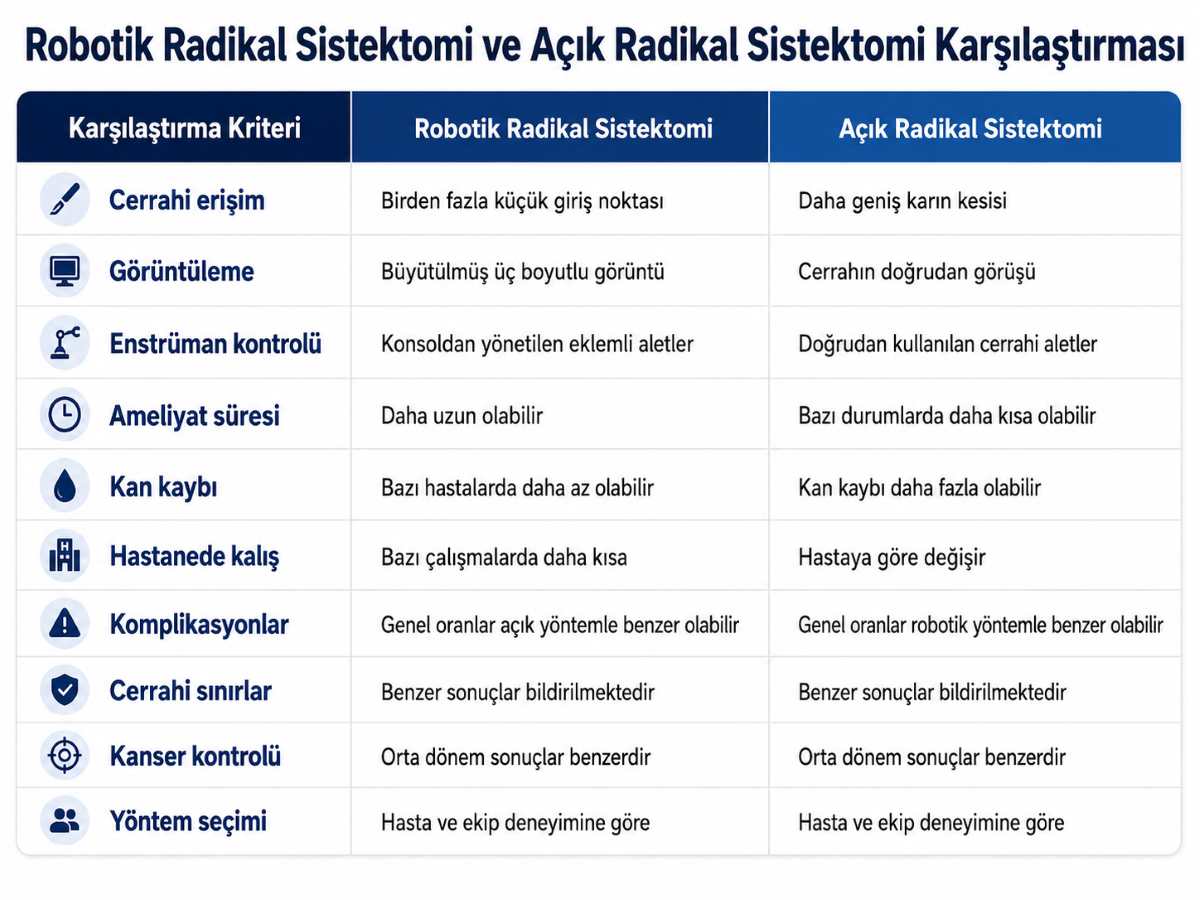
In the Da Vinci robotic surgery system, the surgeon performs the operation from a console using articulated instruments. In the open approach, a larger incision is made in the abdominal area, and the surgeon accesses the tissues directly.
Advantages of Robotic Surgery
Advantages of robotic surgery are associated with performing the surgical access through smaller incisions and allowing the surgeon to view the operative field under magnification.
The following potential advantages may be observed in some patients:
Smaller surgical incisions compared with open surgery
Less blood loss and a lower need for blood transfusion
A more limited wound area
Detailed visualization of the surgical field
Controlled work within the narrow pelvic region
A potentially shorter hospital stay in some patients
Some aspects of physical recovery may begin earlier
These outcomes are not the same for every patient. Because a new urinary pathway is created using the bowel during a significant part of the operation, recovery does not depend solely on the size of the abdominal incisions.
How Is Suitability for Robotic Surgery Evaluated?
Suitability for robotic surgery is not determined solely by the name of the cancer or the patient’s age.
The following factors are considered during the evaluation:
Pathology results and tumor grade
Depth of the cancer within the bladder wall
Status of the lymph nodes and distant organs
The patient’s biological age
Heart and lung function
Kidney and liver function
Nutritional status and mobility
Previous abdominal operations
Possibility of intra-abdominal adhesions
Blood thinners and other medications
Available urinary diversion options
Open surgery and bladder-preserving alternatives
Experience of the surgeon and operating room team
Advanced age alone does not prevent robotic surgery or neobladder reconstruction. However, overall health, cognitive capacity, manual dexterity, and long-term care requirements are important in the decision-making process.
Preparation Before Robotic Cystectomy
Preoperative preparation is performed to help the patient tolerate the surgical burden more safely and to plan the urinary diversion in advance.
The following assessments may be performed during the preparation process:
Blood and urine tests
Assessment of kidney and liver function
Computed tomography or other imaging studies
Anesthesia evaluation
Assessment of heart and lung capacity
Review of current medications
Assessment of nutritional status
Evaluation of daily mobility
Planning for smoking cessation
Discussion of neobladder, ileal conduit, and other options
Stoma site marking and care training if a stoma may be required
No medication, including blood thinners, should be discontinued without a physician’s recommendation. The patient-specific preparation plan is determined by the anesthesia and surgical teams.
and according to the urinary diversion used, it is determined individually.
Robotic Surgery in Ankara
In patients researching robotic surgery in Ankara for bladder cancer, the tumor stage, pathology results, and whether there is a condition requiring removal of the bladder are evaluated first. If radical cystectomy is planned, the potential benefits and limitations of robotic and open surgery, as well as their suitability for the patient, should be considered together.
The surgical plan includes not only removal of the bladder but also assessment of the lymph nodes and selection of the urinary diversion. When this method is evaluated in Ankara, the surgeon’s experience with robotic and open cystectomy, the preparedness of the operating room team, and the available postoperative follow-up resources are important. The method to be used is determined individually according to the characteristics of the tumor and the patient’s overall health.
Relationship Between Bladder Cancer and Smoking