





Sexual health is an important part of an individual’s physical, emotional, and social well-being and is also closely related to urological health. Problems affecting sexual life in women may be related not only to gynecological conditions but also to the urinary tract, bladder, and pelvic floor muscles. female sexual dysfunction is a broad term that includes conditions such as decreased sexual desire, arousal problems, difficulty achieving orgasm, or pain during intercourse. This condition, also referred to in medical literature as female sexual dysfunction, does not depend on a single cause and usually develops due to the combined effect of multiple factors. In particular, urological factors such as pelvic pain, vaginal dryness, urinary tract sensitivity, or bladder problems may directly affect sexual life. In addition, factors such as decreased sexual satisfaction, communication problems with a partner, and stress may also accompany this process. Therefore, the evaluation of sexual dysfunction in women is a condition that should be addressed together from both urological and general health perspectives.
- What Is Female Sexual Dysfunction?
- What Are the Symptoms of Female Sexual Dysfunction?
- What Causes Female Sexual Dysfunction?
- Psychological Causes
- Hormonal and Physical Causes
- Relationship and Communication-Related Factors
- What Are the Types of Female Sexual Dysfunction?
- Low Sexual Desire
- Sexual Arousal Disorder
- Orgasm Disorder
- Pain During Sexual Intercourse
- How Is Female Sexual Dysfunction Evaluated?
- How Is Female Sexual Dysfunction Treated?
- Approach Directed at the Underlying Cause
- Can Female Sexual Dysfunction Go Away on Its Own?
- Frequently Asked Questions About Female Sexual Dysfunction
- Frequently Asked Questions About Female Sexual Dysfunction
What Is Female Sexual Dysfunction?
What is female sexual dysfunction refers to disruptions occurring at any stage of the sexual response cycle. The sexual response cycle consists of the phases of desire, arousal, orgasm, and resolution, and problems experienced in any of these stages are considered sexual dysfunction. This condition may appear in different forms, such as decreased sexual desire, insufficient physiological response during arousal, delayed or absent orgasm, or pain during intercourse. Medically, this condition is also called female sexual dysfunction, and it does not develop due to a single cause; in most cases, it arises from the combined effect of multiple factors.
This disorder is not considered solely a physical problem. In addition to physical factors such as hormonal changes, vaginal dryness, and pelvic floor problems, psychological and social factors such as stress and anxiety, past experiences, relationship problems, and partner communication may also be involved in the process. In particular, emotional closeness and a sense of trust play an important role in maintaining a healthy sexual life. Therefore, changes in sexual function may affect not only an individual’s physical health but also their emotional state and the quality of the relationship.
Female sexual dysfunction may occur temporarily during some periods, while in some individuals it may last longer. This condition, which can affect daily life, self-confidence, and partner relationships, can be managed with proper evaluation and an appropriate approach. For this reason, it is important to seek professional support if the symptoms persist for a long time.

What Are the Symptoms of Female Sexual Dysfunction?
The most common symptoms of female sexual dysfunction include decreased sexual desire, difficulty with arousal, inability to achieve orgasm, and pain during intercourse. These symptoms may occur alone, or more than one symptom may appear at the same time. In addition, the severity and frequency of symptoms may vary from person to person.
In some women, low libido in women becomes more prominent, while in other cases physical complaints may be at the forefront. In particular, women who experience pain during sexual intercourse or a burning sensation during intercourse may find that this condition negatively affects their sexual life. In addition, conditions such as pelvic pain and vaginal dryness may also affect sexual function.
The symptoms that may be seen in female sexual dysfunction can be listed as follows:
Decreased sexual desire: A marked reduction in interest in sexual intercourse or complete loss of interest
Difficulty with sexual arousal: Failure to develop an adequate physical response during arousal
Vaginal dryness: Inability to achieve sufficient lubrication despite arousal
Inability to achieve orgasm or delayed orgasm: Failure to achieve orgasm during sexual intercourse
Pain during intercourse: Pain felt especially at penetration or throughout intercourse
Burning or stinging sensation: A burning feeling that causes discomfort during sexual intercourse
Discomfort in the pelvic region: Pain or a feeling of pressure in the groin or lower abdomen
Avoidance of sexual intercourse: Withdrawing from sexual activity due to negative experiences
These symptoms may not be caused only by physical factors. Stress, anxiety, relationship problems, and emotional factors may also play a role in the development of symptoms. For this reason, if the symptoms persist for a long time or affect quality of life, evaluation may be appropriate.
What Causes Female Sexual Dysfunction?
What causes female sexual dysfunction has a multifactorial answer. This condition usually does not develop due to a single cause; psychological, hormonal, physical, and relationship-related dynamics may come together and affect sexual function. Especially from a urological perspective, problems related to the urinary tract, bladder, and pelvic floor muscles may also directly contribute to this process. Since the female sexual response process is related to both the body and the mind, a problem in any one area may also affect the others. Therefore, it is important to evaluate the causes accurately and, when necessary, also address them from a urological perspective.
Psychological Causes
Psychological factors may affect sexual function. Stress, anxiety, a busy lifestyle, or communication problems within the relationship may lead to decreased sexual desire. This condition may often be temporary, but if it lasts for a long time, it may require evaluation.
Hormonal and Physical Causes
Hormonal changes play a determining role in female sexual health. Especially menopause, the postpartum period, or some hormonal imbalances may cause decreased sexual desire and arousal problems. A drop in estrogen levels may affect the structure of vaginal tissue, leading to dryness and sensitivity.
From a urological perspective, urinary tract infections, bladder sensitivity, and dysfunction of the pelvic floor muscles may affect sexual function. In particular, complaints such as frequent urination, burning during urination, or a feeling of pressure in the pelvic region may cause discomfort during sexual intercourse. In addition, pelvic pain, chronic diseases, or the side effects of some medications may also reduce sexual desire and performance. Especially in individuals experiencing vaginal dryness and pain during sexual intercourse, avoidance of sexual activity may develop and this condition may become more pronounced over time.
Relationship and Communication-Related Factors
Communication and emotional harmony between partners may affect sexual life. However, these factors should generally not be evaluated alone, but together with other physical or urological causes. For this reason, it is important to adopt a holistic approach in cases of sexual dysfunction.
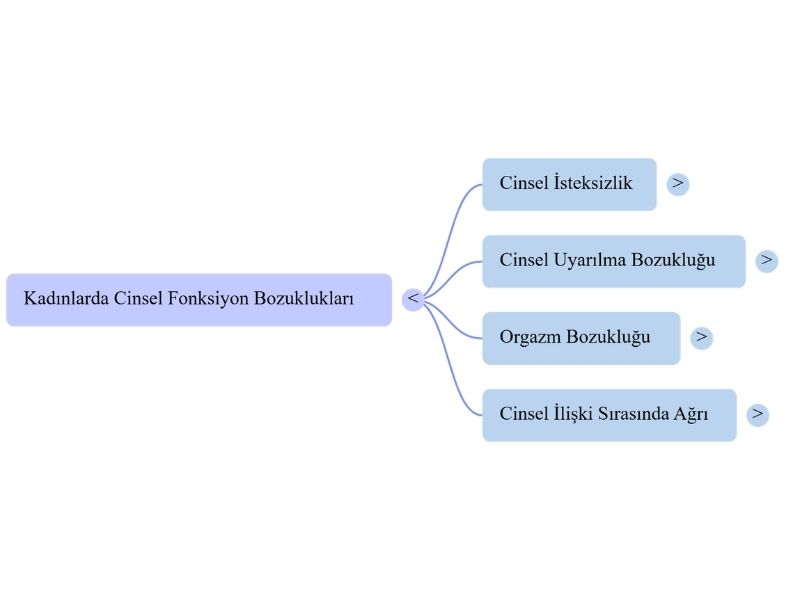
What Are the Types of Female Sexual Dysfunction?
Female sexual dysfunction consists of various subtypes that affect different stages of the sexual response cycle. Each type may present with different symptoms and may develop for different reasons. Especially from a urological perspective, conditions related to the pelvic floor muscles, bladder, and urinary tract may directly affect some of these types. Therefore, it is important to identify correctly at which stage the problem occurs and to evaluate physical and urological factors together.
Low Sexual Desire
Low sexual desire in women is one of the most common types of sexual dysfunction. In this condition, a person may experience a loss of interest in sexual intercourse or a marked decrease in sexual desire. A reduction in sexual thoughts, avoidance of sexual intimacy, or decreased desire for physical contact with a partner may accompany this condition.
This condition is generally associated with stress, anxiety, hormonal changes, relationship problems, or lifestyle factors. In particular, being under intense stress or lacking emotional closeness may directly affect sexual desire. Persistent low sexual desire is a condition that should be evaluated both individually and within the relationship.
Sexual Arousal Disorder
Female sexual arousal disorder, is a condition in which the body fails to produce an adequate physiological response despite the presence of sexual desire. In this process, vaginal lubrication may be insufficient, sensitivity in the genital area may decrease, or the arousal process may not progress as expected.
This condition may be associated with hormonal changes, vaginal dryness, certain medications, or psychological factors. At the same time, not feeling mentally relaxed or being distracted may also affect the arousal process. Arousal disorder may directly affect the comfort and continuity of sexual intercourse.
Orgasm Disorder
Female orgasm disorder or inability to achieve orgasm in women is a condition in which orgasm does not occur or is significantly delayed despite sexual arousal. This condition may continue throughout life in some women, while in others it may develop later.
The orgasm process depends on both physical and psychological factors. Therefore, stress, anxiety, communication problems with a partner, or insufficient arousal may lead to orgasm disorder. Failure to achieve orgasm may reduce sexual satisfaction and, over time, may lead to a decrease in sexual desire.
Pain During Sexual Intercourse
Painful sexual intercourse in women and what causes pain during intercourse are evaluated under this heading. This condition may present as superficial or deep pain during intercourse. The pain may sometimes be felt during penetration and sometimes throughout intercourse.
From a urological perspective, urinary tract infections, bladder sensitivity, and excessive tightness of the pelvic floor muscles may contribute to this condition. In addition, vaginal dryness and hormonal changes may also increase pain. Such conditions may lead to avoidance of sexual intercourse and, over time, may have a more pronounced effect on sexual function.
For this reason, the complaint of pain should not be evaluated only as a local problem but together with possible urological and pelvic floor-related causes.
How Is Female Sexual Dysfunction Evaluated?
The evaluation of female sexual dysfunction is a multifaceted process and does not rely only on physical findings. In the diagnostic process, a detailed medical history is first obtained. At this stage, the onset of symptoms, how long they have lasted, in which situations they increase or decrease, and their effect on sexual life are questioned in detail. In addition, the person’s general health status, medications used, hormonal status, and lifestyle are also included in the evaluation process.
During the evaluation, not only physical symptoms but also psychological and relationship-related factors are taken into consideration. Elements such as stress and anxiety level, past experiences, communication with the partner, and emotional closeness may affect sexual function. Therefore, the evaluation process is planned in a way that includes both the individual’s physical and emotional condition.
A physical examination may be performed when necessary. During this examination, the pelvic region, vaginal structure, and possible physical causes may be evaluated. Vaginal dryness, signs of infection, or the condition of the pelvic floor muscles may be examined at this stage. In addition, in some cases hormone tests or further investigations may also be requested. Especially if a hormonal imbalance is suspected, evaluation may be performed with blood tests.
In some patients, a multidisciplinary approach may be required during the evaluation process.
How Is Female Sexual Dysfunction Treated?
How is female sexual dysfunction treated depends on the underlying cause of the problem. This process is a multifaceted condition that should be evaluated not only gynecologically but also from a urological perspective. In particular, problems related to the urinary tract, bladder, and pelvic floor muscles may directly affect sexual function. Therefore, in some patients, an evaluation and treatment process carried out together with a urologist may provide more comprehensive results.
Approach Directed at the Underlying Cause
The basis of treatment is identifying the underlying cause. Vaginal dryness, infection, pelvic floor muscle problems, or urinary tract-related disorders may contribute to this condition. In particular, symptoms such as burning during urination, frequent urination, or a feeling of pressure in the pelvic region may require urological evaluation.

In such cases, evaluation by both urology and gynecology specialists helps address both sexual function and urinary tract health together. In this way, the treatment process can be planned more holistically. From a urological point of view, bladder health, pelvic floor muscle function, and the presence of urinary tract infections are among the important factors in the treatment process.
Sex therapy and psychological support may contribute to managing psychologically related conditions.
Hormonal or medical treatment options may be considered, especially in cases where hormonal changes are effective.
Strengthening communication between partners may also support a healthier and more balanced sexual life.
Can Female Sexual Dysfunction Go Away on Its Own?
Female sexual dysfunction may be temporary in some cases and may improve on its own within a short time. In particular, a stressful period, fatigue, or temporary hormonal changes may lead to such problems. When these factors resolve, sexual function may also return to normal. However, this is not always the case, and if there is an underlying physical or urological cause, the symptoms may persist.
If the complaints persist for a long time or gradually worsen, spontaneous improvement should not be expected. In particular, conditions such as low sexual desire, difficulty achieving orgasm, vaginal dryness, or pain during intercourse may affect quality of life. In addition, if symptoms such as frequent urination, burning during urination, or a feeling of pressure in the pelvic region are also present, urological evaluation becomes even more important.
For this reason, evaluation may be necessary not only from a gynecological but also from a urological perspective. Bladder health, urinary tract infections, and the condition of the pelvic floor muscles may affect sexual function. With a comprehensive evaluation performed at an early stage, the cause of the problem can be identified more clearly and an appropriate treatment plan can be created. In this way, both sexual health and overall quality of life can be preserved more effectively.
Frequently Asked Questions About Female Sexual Dysfunction
Frequently Asked Questions About Female Sexual Dysfunction
Do urinary tract infections affect sexual intercourse?
Yes, urinary tract infections can cause pain, burning, and discomfort during sexual intercourse.
Does frequent urination affect sexual life?
Frequent urination and bladder sensitivity can reduce sexual comfort and negatively affect sexual life.
Do pelvic floor muscles affect sexual function?
Yes, weak or overly tight pelvic floor muscles can lead to pain during intercourse and problems with arousal.
Do bladder problems cause low sexual desire in women?
Bladder-related problems may lead to decreased sexual desire, especially if they cause pain and discomfort.
What causes pain during sexual intercourse?
Vaginal dryness, infection, or pelvic-related problems may cause this condition.
What is the difference between vaginismus and dyspareunia?
Vaginismus is associated with involuntary muscle contraction, while dyspareunia is associated with pain.
Is treatment for low sexual desire in women possible?
Yes, appropriate treatment can be planned depending on the underlying cause.


