



Prostate enlargement surgery is not necessary for every patient with prostate enlargement. The decision for surgery is made according to the severity of the patient’s urinary complaints, whether they benefit from medication, whether the bladder empties completely, and whether the kidneys are affected by this process. Therefore, prostate size alone is not a sufficient reason for surgery. In some patients, the prostate may be significantly enlarged while symptoms remain mild; in others, a smaller prostate volume may still cause serious obstruction in the urinary canal. At this point, what matters is not the size of the prostate, but how much pressure it creates on the urinary tract and how much it affects the patient’s daily life and urinary system health.
- In Which Situations Is Prostate Enlargement Surgery Considered?
- If Complaints Continue Despite Medication
- May Surgery Be Necessary in Case of Inability to Urinate?
- Is Surgery Evaluated If the Bladder Does Not Empty Completely?
- If There Are Recurrent Urinary Tract Infections
- Is Surgery Necessary If a Bladder Stone Has Formed?
- If the Kidneys Have Started to Be Affected, Surgery Should Not Be Delayed
- If There Is Recurrent Blood in the Urine
- If Daily Quality of Life Has Significantly Declined
- How Is the Decision for Surgery Made?
- What May Happen If Surgery Is Delayed?
- Frequently Asked Questions About Prostate Enlargement Surgery

In Which Situations Is Prostate Enlargement Surgery Considered?
Prostate enlargement surgery is considered when obstruction in the urinary tract significantly disrupts the patient’s daily life or causes additional problems in the body. In patients with mild complaints, follow-up or medication may be sufficient; however, when symptoms progress, surgical options may come into consideration. If the patient urinates frequently but does not feel fully relieved, wakes up often at night to urinate, has a weak urine flow, or needs to wait before starting urination, a more detailed evaluation is required.

When deciding on surgery, not only the patient’s complaints but also the findings obtained from tests are taken into account. Urine flow test, ultrasound, the amount of urine remaining in the bladder after urination, and kidney evaluation are important in this process. If prostate enlargement has started to affect bladder and kidney health, surgery becomes a stronger option.
If Complaints Continue Despite Medication
In prostate enlargement, medication may be tried as the first step in some patients. Medications may help reduce compression in the urinary canal or gradually shrink prostate tissue. However, they may not provide sufficient relief in every patient.
If there is no significant improvement in urine flow despite medication, if frequent urination and waking up at night to urinate continue, or if the feeling of urine remaining in the bladder persists, surgical options may be evaluated. At this point, the important factor is that the patient’s quality of life does not improve despite using medication. Long-lasting complaints are not only a comfort problem; in some patients, they may also affect bladder function. Therefore, surgical options should not be delayed in patients who do not get sufficient results from medication.
May Surgery Be Necessary in Case of Inability to Urinate?
Inability to urinate is one of the important situations that affects the decision for surgery in prostate enlargement. When the bladder is full but urine cannot be expelled, the patient may experience pain, abdominal swelling, and serious discomfort. In this case, a catheter is usually inserted to empty the bladder. However, a catheter provides temporary relief; if the underlying obstruction continues, surgery may be considered for a permanent solution.
Especially if the patient cannot urinate again after the catheter is removed or if episodes of urinary retention recur, this may indicate that prostate enlargement has seriously narrowed the urinary tract. In such cases, follow-up with medication alone may not always be sufficient. The decision for surgery is made according to whether the patient needs repeated catheterization, the contraction strength of the bladder, and the degree of obstruction in the urinary tract.
Is Surgery Evaluated If the Bladder Does Not Empty Completely?
Incomplete emptying of the bladder is an important warning finding in prostate enlargement. Even if the patient feels relieved after urinating, a certain amount of urine may remain in the bladder. This condition is detected with ultrasound or special measurements. Constant urine retention in the bladder may, over time, pave the way for frequent urination, sudden urgency, infection, and bladder stones.
If the amount of urine remaining in the bladder is high and this condition does not improve despite medication, surgery may come into consideration. This is because a bladder that cannot empty completely for a long time may become fatigued and lose its contraction strength. Therefore, the decision for surgery may be made not only to reduce current symptoms but also to prevent long-term damage to the bladder.
If There Are Recurrent Urinary Tract Infections
When the bladder cannot empty completely due to prostate enlargement, the urine remaining inside may make infection easier to develop. Recurrent urinary tract infections may become a problem that can only be temporarily improved with antibiotics. If the main cause of infections is urine remaining in the bladder, treating the infection alone may not be sufficient.
In this case, the obstruction caused by prostate enlargement may need to be relieved. The decision for surgery is evaluated according to the frequency of infections, the amount of urine remaining in the bladder, the condition of urine flow, and the patient’s general health characteristics. If recurrent infections are neglected, they may lead to more serious problems that can affect bladder and kidney health.
Is Surgery Necessary If a Bladder Stone Has Formed?
Urine remaining in the bladder due to prostate enlargement may lead to bladder stone formation over time. A bladder stone may cause complaints such as burning during urination, frequent urination, blood in the urine, sudden interruption of urine flow, and discomfort in the groin area. Removing only the stone may not be sufficient in some patients, because if the main cause of stone formation is obstruction due to prostate enlargement, the problem may recur.
For this reason, prostate enlargement is also evaluated in patients diagnosed with bladder stones. If obstruction in the urinary tract is significant, surgical planning for prostate enlargement may also be considered along with stone treatment. The aim here is not only to remove the existing stone but also to reduce urine accumulation that may lead to stone formation again.
If the Kidneys Have Started to Be Affected, Surgery Should Not Be Delayed
When prostate enlargement causes advanced urinary obstruction, pressure in the bladder may increase, and this pressure may reflect back to the kidneys through the urinary tract. Kidney enlargement, deterioration in kidney function tests, or backward pressure of urine require a more serious evaluation. In this case, the decision for surgery may come into consideration not only to reduce urinary complaints but also to protect kidney function.
In cases where kidney functions have started to be affected, postponing treatment may not be appropriate. The treatment plan is made according to the patient’s kidney functions, degree of obstruction, bladder condition, and general health characteristics. Therefore, regular check-ups in patients with prostate enlargement are important not only for symptom follow-up but also for evaluating kidney health.
If There Is Recurrent Blood in the Urine
In some patients, intermittent or recurrent bleeding in the urine may occur due to prostate enlargement. Bleeding is not always caused by prostate enlargement; stones, infection, bladder diseases, or different urological causes may also lead to blood in the urine. Therefore, patients with bleeding should first undergo a detailed evaluation. If the bleeding is thought to be related to prostate enlargement and it recurs, surgical options may come into consideration.
Recurrent bleeding may cause problems such as anemia, clot formation, or difficulty urinating. In this case, temporarily stopping the bleeding alone may not be sufficient. The effect of the prostate on the urinary tract and its contribution to bleeding are evaluated, and surgery may be planned accordingly.
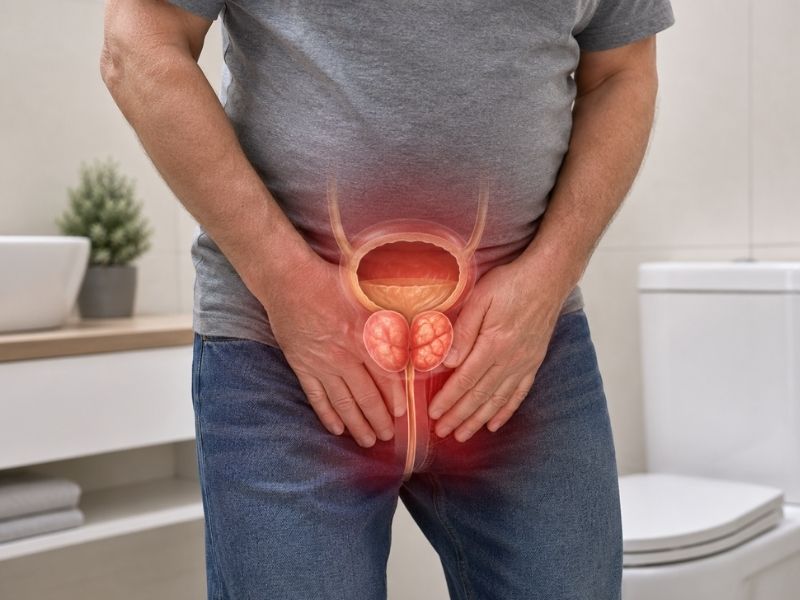
If Daily Quality of Life Has Significantly Declined
Prostate enlargement surgery may be considered not only when serious medical risks develop but also when the patient’s daily life is significantly affected. Waking up many times at night to urinate, avoiding long journeys, constantly looking for a toilet, and fear of urgency during meetings or social environments may reduce the person’s quality of life. If these complaints continue despite medication, surgical options may come into consideration.
The important point here is the continuity of the patient’s complaints and their response to treatment. Surgery is not necessary for mild symptoms; however, if daily life is seriously disrupted, the patient does not benefit sufficiently from medication, and obstruction is detected in objective tests, surgical evaluation may be performed.
How Is the Decision for Surgery Made?
The decision for prostate enlargement surgery is not made based on a single finding. The patient’s complaints, examination findings, urine flow test, ultrasound, the amount of urine remaining in the bladder, kidney functions, and response to medication are evaluated together. Prostate size is an important criterion, but it is not decisive on its own. Smaller prostates may cause serious obstruction, while larger prostates may cause mild symptoms.
When deciding on surgery, the following points are evaluated together:
How much the complaints affect daily life
Whether sufficient benefit is obtained from medication
Whether urine flow has significantly weakened
The amount of urine remaining in the bladder
Whether catheterization is needed
Whether infection, stones, or bleeding have developed
Whether kidney functions are affected
What May Happen If Surgery Is Delayed?
If obstruction caused by prostate enlargement has progressed and surgery is continuously postponed, the bladder and kidneys may be affected over time. When the bladder works against high pressure for a long time, changes may develop in its muscle structure. In this case, even if surgery is performed, the bladder may not always return to its former strength. Therefore, making the surgical decision at the right time is important in some patients.
In delayed cases, inability to urinate, repeated need for catheterization, frequent infections, bladder stones, kidney enlargement, and deterioration in kidney functions may occur. These risks do not occur in every patient; however, if symptoms are progressing and obstruction is detected in tests, surgical options should be evaluated instead of waiting.
Prostate Symptoms Test click here.
Frequently Asked Questions About Prostate Enlargement Surgery
What Happens If Prostate Enlargement Is Not Treated Surgically?
Mild prostate enlargement can be monitored; however, if advanced obstruction is not treated, inability to urinate, infection, bladder stones, and kidney involvement may develop.
How Many Grams Should the Prostate Be for Prostate Enlargement Surgery?
The decision for surgery is not made based only on prostate weight. The severity of complaints, urine flow, the amount of urine remaining in the bladder, and the condition of the kidneys are evaluated together.
Does Catheterization Mean That Prostate Surgery Is Necessary?
Catheterization is an important warning sign, but it does not mean that surgery is definitely required on its own. If inability to urinate recurs after the catheter is removed, surgical options may come into consideration.
What Should Be Done If Prostate Enlargement Does Not Improve With Medication?
If urinary complaints continue despite medication and obstruction persists in tests, surgical evaluation may be performed.
Can Prostate Enlargement Damage the Bladder?
Long-lasting obstruction may prevent the bladder from emptying completely and may cause the bladder muscle to become fatigued over time. Therefore, a high amount of remaining urine should be taken seriously.
Is Frequent Nighttime Urination a Reason for Surgery?
Frequent nighttime urination alone is not always a reason for surgery. However, if it continues despite medication, disrupts quality of life, and is seen together with signs of obstruction, surgical evaluation may be performed.
Is Surgery Necessary If Prostate Enlargement Affects the Kidneys?
If kidney enlargement or impaired kidney function has developed, obstruction caused by prostate enlargement is evaluated more seriously. In this case, the surgical option may be considered without delay.


