Erectile dysfunction, medically known as erectile dysfunction (ED), is the inability to achieve or maintain sufficient penile rigidity for sexual intercourse. This condition can create both physical and psychological difficulties for many men. A healthy erection, which is an important part of sexual life, also directly affects overall quality of life. Men experiencing erectile dysfunction may suffer from a loss of self-confidence not only in their sexual relationships but also in their daily lives. Therefore, it is essential to take this problem seriously, diagnose it promptly, and apply appropriate treatment methods.
- What Is Erectile Dysfunction? Its Importance for Men's Health
- Causes of Erectile Dysfunction
- Symptoms of Erectile Dysfunction and the Diagnostic Process
- Solutions for Erectile Dysfunction
- Erectile Dysfunction Treatment
- Hormonal Support (Testosterone Therapy)
- ESWT (Shock Wave Therapy)
- Frequently Asked Questions About Erectile Dysfunction
- Frequently Asked Questions About Erectile Dysfunction

What Is Erectile Dysfunction? Its Importance for Men's Health
Erectile dysfunction may occur temporarily from time to time, but when it becomes persistent, it develops into a health problem that requires medical evaluation. For the penis to achieve an erection, the nervous, vascular, and hormonal systems must work together properly. A disturbance in any of these systems can lead to erectile dysfunction. Being unable to achieve or maintain sufficient firmness during sexual intercourse can negatively affect the satisfaction of both the individual and their partner. This may cause tension in relationships, emotional distance, and psychological problems over time. Although erectile dysfunction generally becomes more common with increasing age, it is also being seen more frequently among younger men today. Factors such as stress, an unhealthy lifestyle, alcohol consumption, and smoking contribute to this condition. For all these reasons, erectile dysfunction is not merely a sexual disorder but also an important sign that may affect overall health and quality of life.

Causes of Erectile Dysfunction
Erectile dysfunction is a complex condition that often develops as a result of several underlying factors. Physical causes include cardiovascular diseases, diabetes, high blood pressure, obesity, hormonal disorders, and the side effects of certain medications. Diabetes in particular can seriously affect blood vessels and the nervous system, preventing sufficient blood flow to the penis. Heart diseases can similarly impair circulation and make erections more difficult. As chronic diseases become more common with age, erectile dysfunction is also encountered more frequently. Smoking and alcohol consumption can negatively affect vascular health and make it more difficult to achieve an erection.
Psychological factors are also just as important as physical causes. Especially among younger men, many cases of erectile dysfunction are associated with psychological factors such as performance anxiety, stress, anxiety disorders, or depression. Fear of failure during sexual intercourse can create concern that the same situation will happen again, resulting in a vicious cycle. Emotional difficulties with a partner, relationship stress, or previous traumatic experiences may also negatively affect sexual performance. Therefore, both physical and psychological aspects should be considered when investigating the causes of erectile dysfunction.
Symptoms of Erectile Dysfunction and the Diagnostic Process
The most prominent symptom of erectile dysfunction is the inability to achieve or maintain an erection firm enough for sexual intercourse. However, this may sometimes occur as a one-time or temporary problem. When these symptoms persist for three months or longer, clinical evaluation is recommended. The disappearance of morning erections may also be an important indicator in some men. Morning erections can provide information about healthy circulation and hormone levels. Changes in this natural pattern may indicate an underlying problem.
During the diagnosis of erectile dysfunction, the patient's detailed medical history is obtained first. Factors such as lifestyle, medications, alcohol consumption, and smoking are evaluated. A physical examination and laboratory tests are then performed. In particular, levels of hormones associated with sexual function, such as testosterone, are examined. Penile Doppler ultrasound may be used to measure blood flow in the penile arteries and assess possible vascular obstruction. If no physical cause is identified, the patient may be referred to a specialist for psychological support. This comprehensive assessment helps establish an accurate diagnosis and develop the most appropriate treatment plan.
Solutions for Erectile Dysfunction
An individualized approach is adopted in the treatment of erectile dysfunction. If the underlying cause is physical, medical treatments become the primary option. The most commonly used medications are PDE-5 inhibitors, which increase blood flow to the penis and temporarily support erectile function. Although these medications are generally safe when appropriately prescribed, they should be used with caution in individuals with certain health conditions, such as heart disease. In more advanced cases, penile injection treatments or vacuum devices may be recommended. Penile prosthesis surgery may also be considered as a surgical option for men seeking a long-term solution.
Herbal supplements may also provide support in certain cases. Natural supplements such as ginseng, maca root, zinc, and magnesium are sometimes used to support hormonal balance and sexual performance. However, using these products without medical supervision may involve risks, so they should only be taken upon a doctor's recommendation.
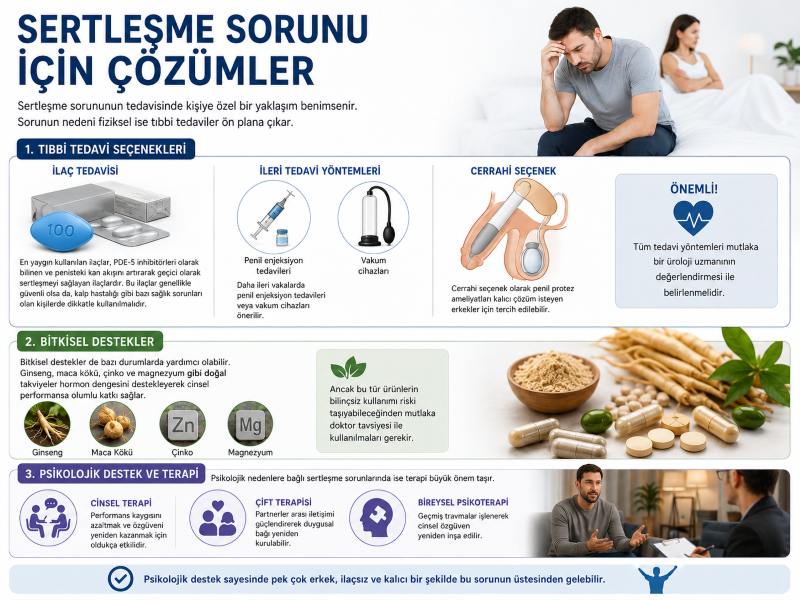
Therapy is especially important for erectile dysfunction associated with psychological causes. Sex therapy can be highly effective in reducing performance anxiety and restoring self-confidence. Couples therapy may strengthen communication between partners and help rebuild emotional connections. Individual psychotherapy can address past traumatic experiences and help restore sexual confidence. With psychological support, many men may overcome this problem without medication and achieve lasting improvements.
Erectile Dysfunction Treatment
Erectile dysfunction is a common health condition that directly affects men's quality of life. Various treatment methods are available, and the treatment plan is generally determined according to the underlying cause. Current approaches such as hormonal support and ESWT (shock wave therapy) are among the treatment options considered for patients seeking lasting improvement.
Hormonal Support (Testosterone Therapy)
Some men experiencing erectile dysfunction may be found to have low testosterone levels. This condition often presents with symptoms such as fatigue, reduced sexual desire, and decreased erection quality. Hormonal therapy may help alleviate these symptoms by restoring blood testosterone levels to the normal range. Testosterone supplementation may be administered through injections, gels, or tablets. However, this treatment should only be considered when testosterone deficiency has been clearly confirmed through blood tests. Otherwise, unnecessary hormone therapy may lead to other health problems. Therefore, treatment must be monitored by a urologist or endocrinologist.
ESWT (Shock Wave Therapy)
ESWT, or low-intensity shock wave therapy, has become one of the most widely discussed non-invasive treatments for erectile dysfunction in recent years. This treatment involves applying low-intensity acoustic waves to the penis with the aim of stimulating new blood vessel formation in the area. This may improve blood flow and support natural erectile function. One of the main advantages of ESWT is that it does not require medication and is generally described as painless. Treatment typically consists of one or two sessions per week over several weeks. Each session lasts approximately 15–20 minutes. Clinical studies have reported promising results, particularly in men with mild to moderate erectile dysfunction, although treatment outcomes may vary.
Both treatment methods may be beneficial when appropriate patients are selected and treatment is performed under specialist supervision. The safest approach for men experiencing erectile dysfunction is to consult a specialist for a comprehensive evaluation rather than taking medications or supplements on their own.
Frequently Asked Questions About Erectile Dysfunction
Frequently Asked Questions About Erectile Dysfunction
What causes erectile dysfunction?
It occurs due to vascular, neurological, and hormonal disorders, as well as psychological factors.
At what age does erectile dysfunction begin?
It generally begins after the age of 40, but it can also occur in younger men.
Can erectile dysfunction have psychological causes?
Yes, stress, anxiety, and depression frequently affect erectile function.
Can erectile dysfunction be completely resolved?
With appropriate treatment, a temporary or permanent solution can be achieved in most cases.
Does erectile dysfunction affect relationships?
Yes, it can lead to dissatisfaction and problems with one's partner.
Can erectile dysfunction be prevented?
Erectile dysfunction can largely be prevented through a healthy lifestyle.
Is erectile dysfunction common?
Yes, it is very common, especially among men over the age of 40.
Can erectile dysfunction be a sign of heart disease?
It can be; circulatory disorders affect erectile function.
How is erectile dysfunction diagnosed?
Erectile dysfunction is diagnosed through blood tests, hormone tests, and penile Doppler ultrasound.
Are other treatment methods effective for erectile dysfunction?
Yes, vacuum devices, injections, and ESWT are quite effective for erectile dysfunction.