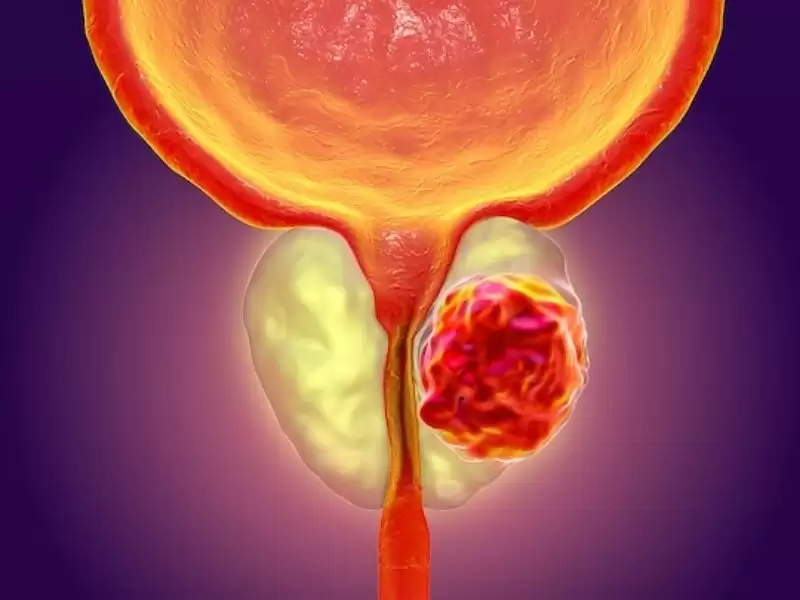
Chronic prostatitis is a long-term and complex health condition that can significantly affect men's quality of life. Chronic prostatitis, which also includes forms that are not caused by infection, can be challenging for patients due to both physical and psychological effects. The diagnosis and treatment of chronic prostatitis require careful evaluation because its symptoms may resemble those of many other conditions.

What Is Chronic Prostatitis?
Chronic prostatitis is a common urological condition in men that negatively affects quality of life. It refers to long-term inflammation of the prostate gland. However, it is not always caused by an infection. Prostatitis is divided into four main categories: acute bacterial prostatitis, chronic bacterial prostatitis, chronic prostatitis/chronic pelvic pain syndrome (CP/CPPS), and asymptomatic inflammatory prostatitis. Among these, chronic prostatitis is the most common and one of the most challenging to treat.
Chronic prostatitis generally manifests as persistent discomfort and pain in the lower abdomen, pelvic region, or genital area. These symptoms may continue for long periods and fluctuate over time, sometimes becoming more severe and sometimes less noticeable.

What Are the Symptoms of Chronic Prostatitis?
Chronic prostatitis is a complex condition that can cause a variety of symptoms with different levels of severity from person to person. Symptoms generally involve pain, urinary problems, and sexual dysfunction. Pain is usually felt in the lower abdomen, groin, lower back, and perineum, the area between the anus and the scrotum. It may present as continuous discomfort and fluctuate throughout the day. Sitting or standing for long periods may increase the pain. Some patients describe a sensation of pressure or fullness in the rectal area.
Significant changes in sexual function may also occur. Pain may be experienced during or after ejaculation. Erectile difficulties and reduced sexual desire are also common.
This condition can significantly affect an individual's quality of life, both physically and psychologically. Symptoms such as a burning sensation during urination, the need for frequent urination, and a weak urinary stream also play an important role in evaluating prostatitis. These symptoms may fluctuate over time; patients may feel better for several weeks before their symptoms worsen again. This fluctuating course is one of the most challenging aspects of the condition.
How Is Chronic Prostatitis Diagnosed?
To establish a diagnosis of chronic prostatitis, a detailed medical history is first obtained, followed by a physical examination. The patient's symptoms, their duration, and their severity are evaluated. Particular attention is paid to the location of pain, urinary difficulties, and changes in sexual function. This information helps the physician develop an overall understanding of the condition.
A digital rectal examination (DRE) is usually performed during the physical examination. During this procedure, the physician uses a gloved, lubricated finger to examine the prostate through the rectum. The size of the prostate, its surface characteristics, and tenderness are assessed. If tenderness is detected during the examination, it may strengthen the suspicion of chronic prostatitis.
Laboratory tests and imaging methods may be used to confirm the diagnosis. Urine tests help identify signs of infection. In addition, fluid samples collected after prostate massage may be examined microscopically to investigate the presence of inflammatory cells. When necessary, imaging techniques such as ultrasonography or magnetic resonance imaging (MRI) may be used to examine the prostate in detail. These imaging methods are important for excluding more serious conditions, such as prostate cancer.
Chronic Prostatitis Treatment
Treatment of chronic prostatitis requires a multidisciplinary approach because of the complex nature of the condition. The main goal of treatment is to control symptoms and make daily life more comfortable for the patient. Medication is generally the first step in this process, which varies from patient to patient. Antibiotics are used when a bacterial infection is suspected. However, most cases of chronic prostatitis are not caused by infection. In these cases, alpha-blocker medications may relax the muscles of the prostate and bladder neck, improving urinary flow. Nonsteroidal anti-inflammatory drugs (NSAIDs) may also be recommended to reduce inflammation and pain.
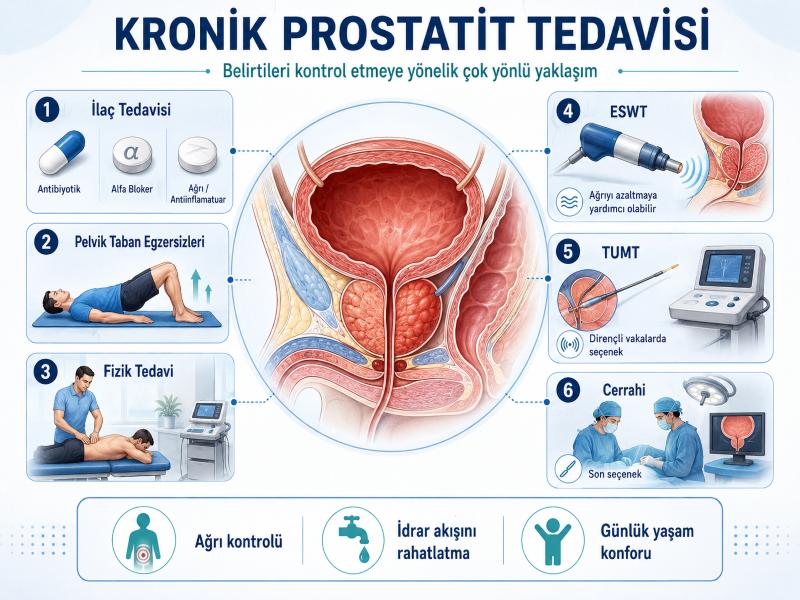
Physical therapy and pelvic floor exercises also play an important role in treatment. These approaches can provide considerable relief, particularly for patients experiencing pelvic muscle spasms. Among alternative treatments, low-intensity extracorporeal shock wave therapy (ESWT) is a notable option. This method aims to reduce pain and improve blood circulation. In cases resistant to medication, technological methods such as transurethral microwave therapy (TUMT) may also be effective.
In rare cases, surgical intervention may be considered if all other methods prove insufficient. Transurethral Resection of the Prostate (TURP) or laser procedures may be performed to improve urinary flow. However, surgery is considered a last resort, reserved for severe and treatment-resistant cases.