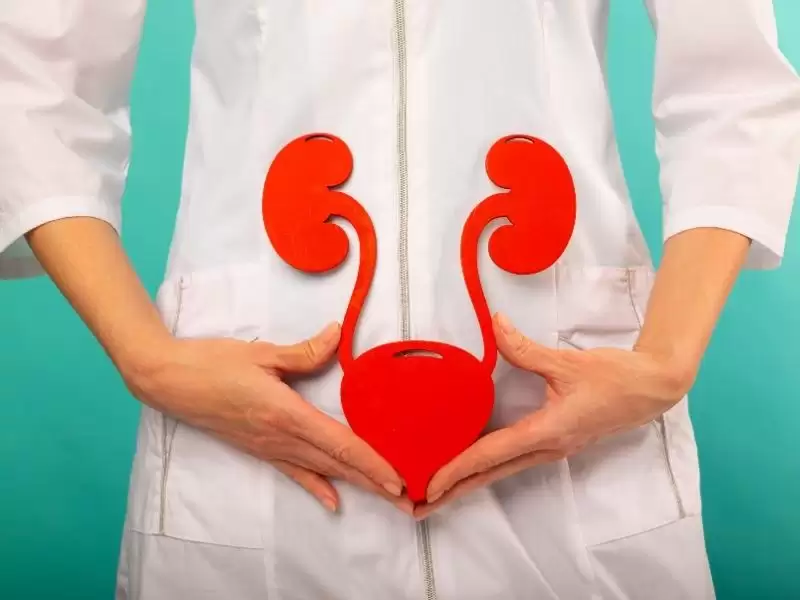
Vesicoureteral Reflux (VUR) is an important urinary tract condition that is common during childhood and can directly affect kidney health. This condition, which occurs when urine flows backward from the bladder toward the kidneys, often manifests through recurrent urinary tract infections.
If not diagnosed early, it can lead to serious consequences, including permanent kidney damage and even kidney failure. However, with regular monitoring and appropriate treatment methods, VUR can be managed, supporting the healthy development of children. Therefore, understanding VUR is of vital importance for families and physicians.
- What Is Vesicoureteral Reflux (VUR)?
- What Are the Symptoms of Vesicoureteral Reflux (VUR)?
- What Causes Vesicoureteral Reflux (VUR)?
- Is Vesicoureteral Reflux (VUR) Common?
- How Is Vesicoureteral Reflux (VUR) Treated?
- Frequently Asked Questions About Vesicoureteral Reflux (VUR)
- Frequently Asked Questions About Vesicoureteral Reflux (VUR)


What Is Vesicoureteral Reflux (VUR)?
Vesicoureteral Reflux, abbreviated as VUR, is a condition in which urine flows in the opposite direction to its normal path, traveling backward from the bladder into the ureters and kidneys. Normally, urine filtered by the kidneys is transported through the ureters to the bladder, where it is stored before being expelled from the body. However, in VUR, the valve mechanism between the bladder and ureters does not function properly, causing urine to flow backward toward the kidneys. VUR, a common condition in children, may cause kidney damage, recurrent urinary tract infections, and serious complications that can eventually progress to kidney failure. The condition may be associated with both congenital structural abnormalities and bladder problems that develop later in life.
What Are the Symptoms of Vesicoureteral Reflux (VUR)?
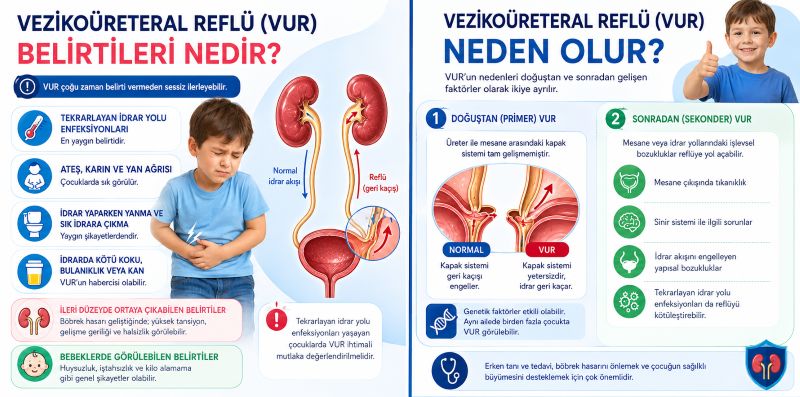
VUR can often progress silently without obvious symptoms. However, one of the most common signs is recurrent urinary tract infections. Especially in children, fever, abdominal and flank pain, burning during urination, and frequent urination are among the most important indicators of VUR. Foul-smelling or cloudy urine, or blood in the urine, may also indicate VUR. In more advanced cases, when kidney damage develops, symptoms such as high blood pressure, growth retardation, and fatigue may occur. Infants may experience general symptoms such as irritability, loss of appetite, and poor weight gain. Therefore, the possibility of VUR should always be considered in children experiencing recurrent urinary tract infections.
What Causes Vesicoureteral Reflux (VUR)?
The causes of VUR are divided into congenital and acquired factors. In the congenital form, the valve system between the ureter and bladder has not fully developed. Normally, this valve prevents urine from flowing backward. However, in children with VUR, this mechanism is insufficient. In the acquired form, functional disorders of the bladder muscles or urinary tract may cause reflux. Bladder outlet obstruction, nervous system problems, or structural abnormalities that obstruct urine flow may contribute to the development of VUR. Genetic factors are also known to play a role. The occurrence of VUR in multiple children within the same family supports this association.
Is Vesicoureteral Reflux (VUR) Common?
VUR is a relatively common condition, particularly in childhood. According to studies, VUR is detected in approximately one-third of children who experience urinary tract infections. It is more frequently observed in girls than in boys. This is attributed to girls being more susceptible to urinary tract infections. VUR that begins during infancy may resolve spontaneously in some children. Particularly in low-grade VUR cases, reflux may disappear as the valve mechanism matures with growth. However, high-grade VUR cases do not resolve spontaneously and require treatment. If not diagnosed and treated early, the condition may cause permanent kidney damage. Therefore, in addition to being common, it is a condition that must be taken seriously.

How Is Vesicoureteral Reflux (VUR) Treated?
Although rare, VUR may also occur in adults. It usually represents the continuation of cases that were not diagnosed or treated during childhood. Treatment varies depending on the severity of the condition, the child's age, the severity of symptoms, and whether kidney damage is present. In low-grade VUR cases, monitoring and preventive antibiotic treatment are generally preferred. This approach aims to prevent infections and protect the kidneys. As the child grows, the valve system may mature and reflux may resolve. Regular follow-up is extremely important in this process. The course of the condition is monitored through urine tests, ultrasound, and other imaging methods.
In cases of high-grade VUR or frequently recurring urinary tract infections, surgical methods may be considered. Traditional surgery involves reconstructing the area where the ureter enters the bladder to strengthen the valve mechanism. A less invasive method, endoscopic injection therapy, may also be used. In this method, a special substance is injected into the area where the ureter enters the bladder to improve the function of the valve mechanism. In cases requiring surgery, success rates are quite high, and the vast majority of children continue to lead healthy lives after treatment.
The role of families in VUR treatment is also important. Parents' ability to recognize the symptoms of urinary tract infections early, attend regular medical checkups, and follow hygiene practices directly affects treatment success. Early diagnosis, appropriate treatment, and regular follow-up can help protect kidney health and support a healthy life for the child.
Frequently Asked Questions About Vesicoureteral Reflux (VUR)
Frequently Asked Questions About Vesicoureteral Reflux (VUR)
Who is most commonly affected by Vesicoureteral Reflux (VUR)?
VUR most commonly occurs in children, especially during infancy and early childhood. It is more common in girls.
Can Vesicoureteral Reflux (VUR) resolve on its own?
Most cases of low-grade VUR may resolve spontaneously as the child grows. However, high-grade VUR generally requires treatment.
Is Vesicoureteral Reflux (VUR) genetic?
Yes, VUR has a genetic component. VUR may occur in more than one child within the same family.
What is the most important symptom of VUR?
The most common symptom is recurrent urinary tract infections. In addition, blood in the urine, fever, and flank pain may also occur.
Can Vesicoureteral Reflux (VUR) cause kidney failure?
Yes. If it is not diagnosed and treated early, it may progress to kidney failure in the long term.
Is Vesicoureteral Reflux (VUR) contagious?
No, VUR is not contagious. It develops due to congenital conditions or structural abnormalities in the urinary tract.
Are there different grades of VUR?
Yes. VUR is graded from 1 to 5. Grades 1 and 2 indicate low-grade VUR, while grades 4 and 5 indicate high-grade VUR.
Can Vesicoureteral Reflux (VUR) occur in adults?
Although rare, it can also occur in adults. It is generally a continuation of cases that were not diagnosed or treated during childhood.