





If your doctor has recommended active surveillance following a prostate cancer diagnosis, the first question that may come to mind is: I have cancer inside my body, so why am I not receiving treatment immediately?
This concern is understandable. The word cancer often makes people think that surgery or another treatment must begin immediately. However, some prostate cancers progress slowly and may not require immediate treatment.
Active surveillance in prostate cancer does not mean ignoring the disease. It means closely monitoring prostate cancers with certain risk characteristics through regular PSA tests, prostate MRI, clinical examinations, and follow-up biopsies when necessary.
The aim is to avoid the side effects associated with surgery or other treatments in patients who do not require immediate treatment, while detecting significant changes in the disease in a timely manner.
In short, active surveillance is not a period of waiting without doing anything.
- Active Surveillance Does Not Mean "Doing Nothing"
- The Difference Between Active Surveillance and Watchful Waiting
- Who Is Suitable for Active Surveillance?
- Low-Risk Disease (ISUP 1)
- Selected Favorable Intermediate-Risk Disease (ISUP 2)
- Situations Where Active Surveillance May Not Be Appropriate
- Which Tests Are Performed During Active Surveillance, and How Often?
- PSA and PSA Density
- Multiparametric Prostate MRI
- Confirmatory and Follow-Up Biopsy
- When Is Treatment Started Instead of Active Surveillance?
- Lifestyle During Active Surveillance: What Can You Change?
- How Can You Cope With the Fear of "What If We Miss Something?"
- Active Surveillance or Treatment? Criteria We Evaluate Together
- Frequently Asked Questions
- Frequently Asked Questions About Active Surveillance in Prostate Cancer
Active Surveillance Does Not Mean "Doing Nothing"
The simplest answer to the question what is active surveillance is that it involves planned and regular monitoring of prostate cancer with a low risk of progression.
During active surveillance, the patient is assessed at specific intervals. The following monitoring tools may be used:
- PSA measurement
- Changes in PSA levels over time
- PSA density
- Clinical follow-up
- Multiparametric prostate MRI
- Confirmatory or follow-up biopsy when necessary
The goal is to understand how the disease progresses.
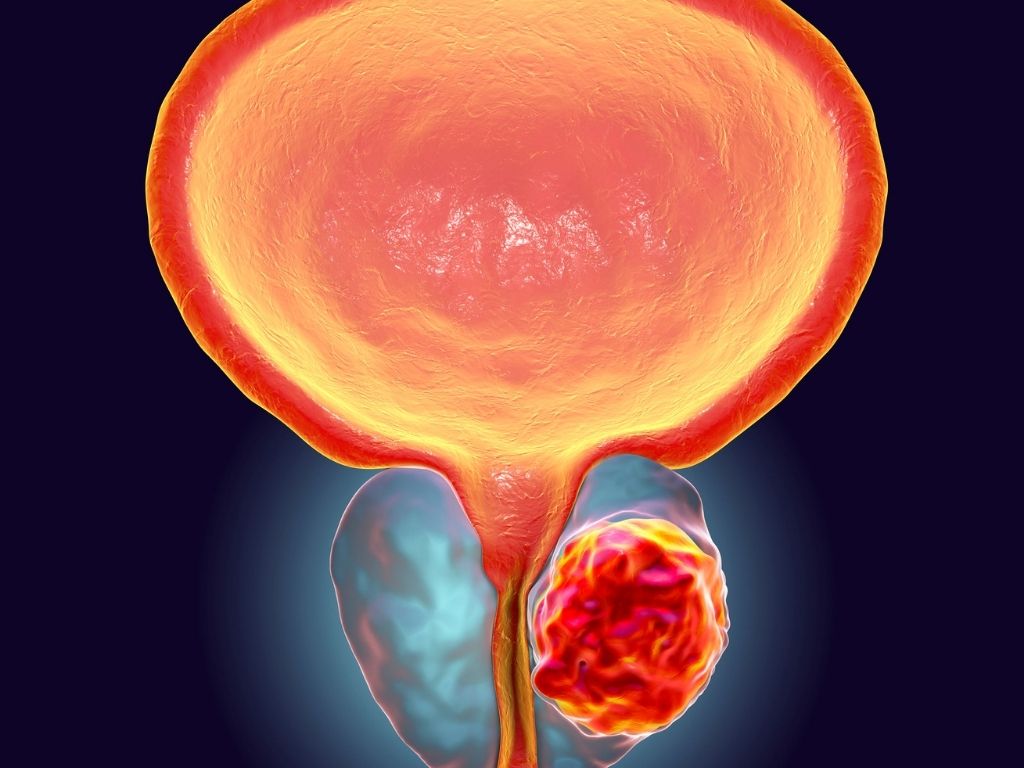
For example, doctors evaluate how PSA changes over time, whether a new or enlarging area appears on MRI, and whether the tumor grade has increased on a follow-up biopsy.
Therefore, not receiving treatment and being left without medical monitoring are not the same thing.
During active surveillance, the patient is closely monitored, and treatment is reconsidered if the biological characteristics of the disease change.
The Difference Between Active Surveillance and Watchful Waiting
The distinction between active surveillance and watchful waiting is particularly important because these two approaches are often confused.
Feature | Active Surveillance | Watchful Waiting |
Main Objective | Detect changes in the disease early and initiate curative treatment when necessary | Plan treatment to manage symptoms if they develop |
Who May Be Considered? | Patients with a long life expectancy and low-risk or carefully selected favorable intermediate-risk disease | Some older patients or those with serious accompanying illnesses or limited life expectancy |
Follow-Up Method | Scheduled monitoring such as PSA tests, MRI, and biopsies when necessary | Monitoring based primarily on clinical signs and symptoms |
Transition to Treatment | Curative treatment may be considered if the characteristics of the disease change | Symptom management may take priority when complaints develop |
The goal of active surveillance is to preserve the opportunity to treat prostate cancer with curative methods when necessary.
In watchful waiting, the objective may be different. Particularly in individuals with other serious health conditions or a limited life expectancy, less intensive monitoring may be preferred as long as the disease does not cause symptoms.
Therefore, active surveillance and watchful waiting are not synonymous.
Who Is Suitable for Active Surveillance?
The decision to use active surveillance is not based solely on whether cancer is present.
It can be an important option, particularly for patients with low-risk prostate cancer. However, suitability is determined by considering multiple factors together, not just the Gleason score or ISUP grade group.
The following information is important during evaluation:
- ISUP grade group
- Gleason pattern
- PSA level
- PSA density
- Multiparametric MRI findings
- Number of positive biopsy cores
- Percentage of tumor involvement
- Clinical stage
- Patient's age
- Overall health condition
- Ability to adhere to the monitoring program
- Patient preference
Low-Risk Disease (ISUP 1)
Active surveillance may be a strong option for some patients with ISUP Grade Group 1, also known as Gleason 3+3.
Prostate cancers in this group generally demonstrate lower-grade biological characteristics.
However, not all patients with ISUP 1 disease are the same.
For example, patients require more detailed assessment if there are many positive biopsy cores, a high percentage of tumor involvement, concerning PSA density, or a more suspicious area on MRI.
Therefore, a Gleason score of 6 alone does not automatically lead to a decision for active surveillance.

Selected Favorable Intermediate-Risk Disease (ISUP 2)
Active surveillance may also be considered for some carefully selected patients with ISUP Grade Group 2, also known as Gleason 3+4.
The amount of pattern 4 is particularly important in this group.
A limited proportion of pattern 4, low tumor volume, favorable PSA levels and PSA density, and MRI findings that do not suggest more advanced disease may support consideration of active surveillance.
However, not everyone with ISUP 2 disease is suitable for active surveillance.
In patients with a larger amount of pattern 4, higher tumor burden, or more significant additional risk characteristics, treatment may become a more strongly recommended option.
Situations Where Active Surveillance May Not Be Appropriate
Active surveillance may not be appropriate for certain patients.
The following situations require particularly careful consideration:
- Higher ISUP grade group
- Significant presence of pattern 4 or pattern 5
- High tumor volume
- Numerous positive biopsy cores
- Suspicion of more advanced disease on MRI
- Findings suggesting progression in clinical stage
- An increase in tumor grade on follow-up biopsy
- Additional pathological findings, such as cribriform or intraductal features
- Inability to attend regular follow-up appointments or missed examinations
Active surveillance is meaningful only when regular monitoring can be maintained.
Which Tests Are Performed During Active Surveillance, and How Often?
There is no single monitoring schedule that applies to everyone undergoing active surveillance.
The frequency of follow-up may vary according to the initial risk characteristics, changes in PSA, MRI findings, and previous biopsy results.
Monitoring Tool | General Purpose | How Is Frequency Determined? |
PSA | Monitor PSA levels and changes over time | According to the risk profile and previous results |
Clinical Examination | Assess new findings and overall condition | According to the individualized follow-up plan |
Multiparametric Prostate MRI | Assess changes in suspicious areas | According to baseline MRI, PSA changes, and previous findings |
Follow-Up Biopsy | Confirm changes in tumor grade and volume | According to previous biopsy, MRI, and PSA results |
PSA and PSA Density
PSA is one of the important monitoring tools used during active surveillance.
However, it is not appropriate to conclude that the disease has progressed based on a single PSA value.
PSA can also change because of prostate enlargement, infection, and other causes.
Therefore, the pattern of PSA changes over time and PSA density, calculated in relation to prostate volume, may be evaluated together.
An increase in PSA generally prompts more detailed assessment. However, it does not by itself mean that treatment must begin.
Multiparametric Prostate MRI
Multiparametric prostate MRI can help monitor suspicious areas within the prostate.
During active surveillance, doctors can assess whether an area identified previously has changed in size or characteristics.
The appearance of a new suspicious area on MRI or greater prominence of an existing area may lead to consideration of a follow-up biopsy.
However, MRI does not replace biopsy in every situation.
A normal MRI result does not definitively exclude the presence of higher-grade disease at the microscopic level.

Confirmatory and Follow-Up Biopsy
The initial biopsy may not represent the entire prostate.
Therefore, some patients planning active surveillance may require a confirmatory biopsy. Repeat biopsies may also be performed under certain circumstances during follow-up.
The follow-up biopsy particularly aims to answer the following questions:
- Has the ISUP grade changed?
- Has the Gleason pattern increased?
- Has the amount of pattern 4 increased?
- Has tumor volume increased?
- Have new high-risk pathological features appeared?
These findings provide important information about whether active surveillance should continue.
When Is Treatment Started Instead of Active Surveillance?
The decision to transition from active surveillance to treatment is generally not based on a single test result.
The main situations that may prompt consideration of treatment include:
- An increase in Gleason or ISUP grade on follow-up biopsy
- A significant increase in the amount of pattern 4
- The appearance of new, higher-risk pathological features
- A significant increase in tumor volume
- An increase in the number of positive biopsy cores
- An increase in the percentage of tumor involvement in biopsy samples
- Significant progression of the lesion on prostate MRI
- New findings suggesting progression in clinical stage
- PSA changes suggesting disease progression when considered together with other findings
- The patient's preference for treatment rather than active surveillance
Particular care is needed when interpreting PSA.
An increase in PSA at a single follow-up appointment does not, by itself, mean that active surveillance has failed.
The value should first be confirmed and assessed together with PSA density, MRI, and biopsy findings when necessary.
The decision to initiate treatment is made after considering all follow-up information together.
Lifestyle During Active Surveillance: What Can You Change?
Maintaining healthy lifestyle habits during active surveillance is important for overall health.
A balanced diet, regular physical activity, maintaining a healthy body weight, and avoiding smoking may benefit cardiovascular and metabolic health.
However, no particular food, supplement, or herbal product should be assumed to stop prostate cancer.
Lifestyle changes are not a substitute for active surveillance.
PSA tests, MRI examinations, or biopsies when necessary should not be discontinued simply because a person follows a healthy diet.
The most appropriate approach is to maintain sustainable habits that benefit overall health alongside the surveillance program.

How Can You Cope With the Fear of "What If We Miss Something?"
One of the most common fears among patients recommended active surveillance is:
What happens if the cancer progresses and we notice it too late?
This concern is one of the most challenging aspects of active surveillance.
However, the main purpose of active surveillance is precisely to detect significant changes as early as possible.
This is why PSA monitoring, MRI, and follow-up biopsies are performed.
When patients understand which findings will be monitored and under what circumstances treatment will begin before starting active surveillance, uncertainty generally decreases.
It would be incorrect to describe active surveillance as completely risk-free. No monitoring method in medicine can offer such a guarantee.
However, appropriate patient selection and regular follow-up allow changes in disease characteristics to be closely monitored.
If anxiety significantly affects daily life, this should also be discussed with the doctor. The decision to pursue active surveillance takes into account not only tumor characteristics but also how comfortable the patient feels living with this approach.
Active Surveillance or Treatment? Criteria We Evaluate Together
The option of monitoring without surgery is not based solely on the belief that the cancer appears to be low-risk.
Many factors are evaluated together when making the decision:
- Patient's age
- Overall health condition
- Life expectancy
- ISUP grade group
- Gleason pattern
- Amount of pattern 4
- PSA level
- PSA density
- Prostate MRI findings
- Number of positive biopsy cores
- Percentage of tumor involvement
- Additional pathological risk features
- Ability to adhere to regular follow-up
- Patient preferences and concerns
For some patients, active surveillance may be an appropriate option for avoiding unnecessary treatment.
For other patients, surgery or other curative treatments may be more appropriate because of the characteristics of their disease.
The aim is neither to direct every patient toward surgery nor to keep every patient under active surveillance.
What matters is evaluating the biological characteristics of the disease together with the patient's overall condition.
Frequently Asked Questions
Frequently Asked Questions About Active Surveillance in Prostate Cancer
Does Active Surveillance Mean Leaving Cancer Untreated?
No. Active surveillance is a planned monitoring approach involving regular PSA tests, MRI scans, and biopsies when necessary. If the characteristics of the disease change, treatment is considered.
Is Everyone With Gleason 3+3 Suitable for Active Surveillance?
No. Gleason 3+3 and ISUP 1 represent one of the groups that may be suitable for active surveillance, but PSA, PSA density, MRI, tumor volume, and biopsy burden must also be evaluated.
Can Active Surveillance Be Used in Patients With ISUP 2?
Active surveillance may be considered in some selected patients with ISUP 2. It is particularly important that the amount of pattern 4 is limited and that other risk characteristics are considered suitable. Not every patient with ISUP 2 is suitable for active surveillance.
How Often Is PSA Checked During Active Surveillance?
The frequency of follow-up varies from person to person. Follow-up intervals may be determined according to initial risk characteristics, previous PSA results, and other monitoring findings.
Is a Biopsy Required Every Year During Active Surveillance?
Not every patient needs biopsies at the same frequency. Biopsy timing is planned according to PSA, MRI, previous pathology results, and individual risks.
Is a Biopsy Unnecessary If the MRI Is Normal?
Not always. MRI provides important information but may not show all characteristics of microscopic disease. Therefore, some patients may require a follow-up biopsy even if the MRI is normal.
Is Treatment Started Immediately If PSA Rises?
No. A single rise in PSA is generally not sufficient. The value is confirmed and evaluated together with PSA density, MRI, biopsy, and other clinical data.
Can Cancer Spread During Active Surveillance?
The risk is not completely zero. The aim of active surveillance is to detect significant changes in the disease early through appropriate patient selection and regular check-ups.
How Long Can Active Surveillance Continue?
Monitoring may continue for many years as long as the disease characteristics do not change and the patient continues to meet the criteria for active surveillance. There is no single predetermined duration for every patient.
Can Surgery Be Performed After Active Surveillance?
Yes. If a change in the grade or volume of the disease requiring treatment occurs during follow-up, surgery or other curative treatments may be considered in suitable patients.
Are Active Surveillance and Watchful Waiting the Same Thing?
No. During active surveillance, the patient is closely monitored with regular tests, and curative treatment is initiated if necessary. In the watchful waiting approach, the purpose and intensity of monitoring are different.
Active surveillance does not mean ignoring prostate cancer. On the contrary, it is a planned approach that regularly monitors the characteristics of the disease through tests and reassesses over time whether treatment is truly necessary.
The decision is not based solely on the Gleason or ISUP group. PSA, PSA density, prostate MRI, biopsy findings, tumor volume, and the patient's general health are considered together. Similarly, the decision to initiate treatment is based not on a single PSA increase but on changes across all monitoring findings.
In a properly selected patient, active surveillance offers an opportunity to avoid the side effects that immediate treatment might cause while keeping the option of starting treatment open when necessary. Therefore, active surveillance is not passive waiting but an active monitoring process with specific rules and regular check-ups.


