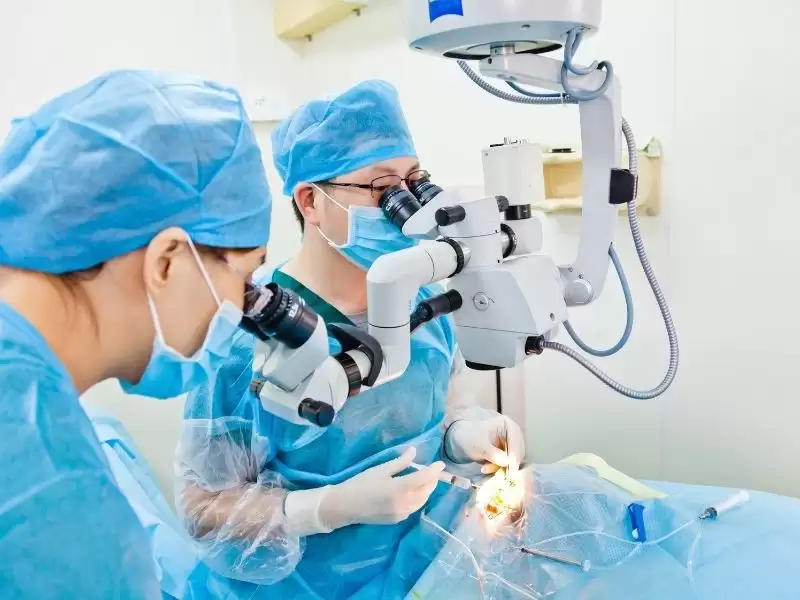
Among the most common concerns of patients preparing for robotic prostate cancer surgery are when urinary control will return, how sexual life will be affected, how long the urinary catheter will remain in place, and when they can resume their daily activities. Recovery after robotic prostate surgery does not follow a single fixed timeline. Age, urinary and sexual function before surgery, characteristics of prostate cancer, the extent of surgery, and overall health can all affect recovery time.
After surgery, urinary leakage decreases significantly within a few weeks in some patients, while others may need more time to regain control. Similarly, recovery of erectile function often takes longer than recovery of urinary control.
Therefore, rather than evaluating recovery solely by the number of days or months since surgery, it is more meaningful to monitor changes over time.
- The First Weeks After Surgery: Hospital Stay, Catheter, and Returning Home
- General Postoperative Recovery Timeline
- When Does Urinary Control Return?
- Why Does Urinary Leakage Occur After Catheter Removal?
- Pelvic Floor Kegel Exercises: Starting Before Surgery
- Factors Affecting Recovery
- Options for Persistent Urinary Incontinence
- When Does Erectile Function Return?
- What Is Nerve-Sparing Surgery, and Who Is Eligible?
- Penile Rehabilitation: Medication, Vacuum Devices, and Shock Wave Therapy
- If Function Does Not Return: Penile Prosthesis
- Changes in Sexual Life After Surgery
- PSA Monitoring: What Should PSA Be After Surgery?
- Returning to Daily Life: Driving, Work, Exercise, and Travel
- Which Symptoms Require Immediate Medical Contact?
- Frequently Asked Questions
- Frequently Asked Questions About Robotic Prostate Surgery
The First Weeks After Surgery: Hospital Stay, Catheter, and Returning Home
During robotic radical prostatectomy, the prostate gland and usually the seminal vesicles are removed. The bladder is then reconnected to the urethra. A temporary urinary catheter is used after surgery to allow this connection to heal safely.
Patients are often encouraged to get out of bed and move around early after surgery. Short walks help support circulation, restore bowel movements, and reduce the risk of blood clots.
Discharge is planned after evaluating the patient's return to eating, pain control, and overall condition.
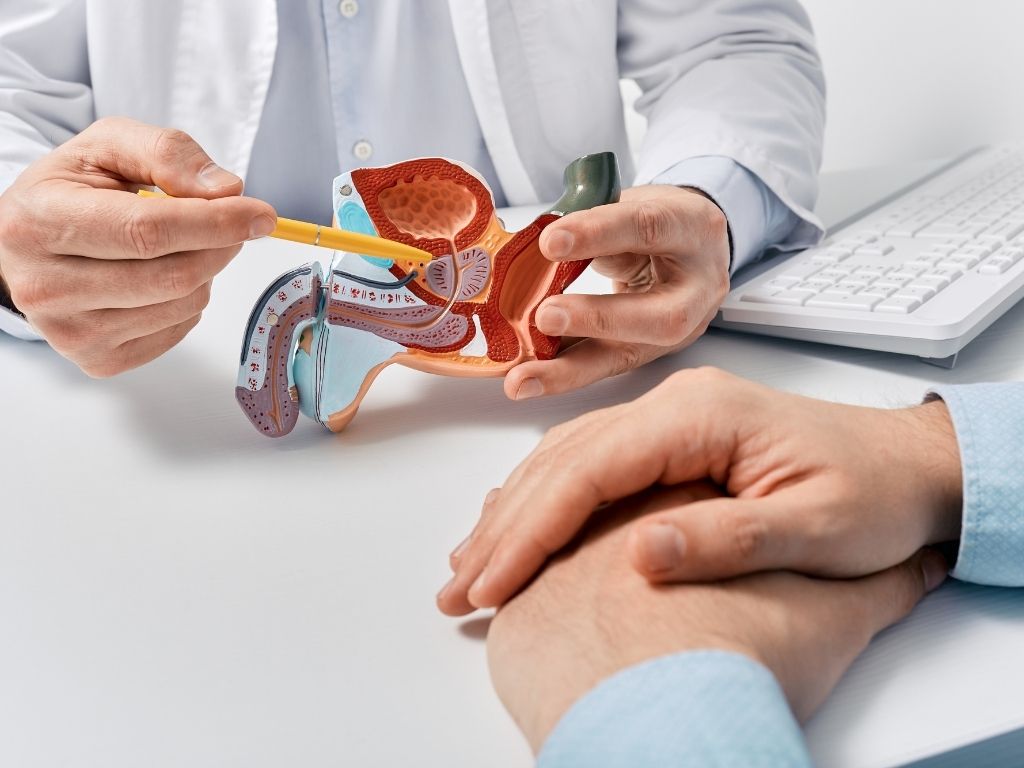
One of the most frequently asked questions is how many days the catheter remains in place. The duration depends on the surgeon's preference, the condition of the connection between the bladder and urethra, and the patient's recovery. For many patients, this may range from a few days to approximately 1–2 weeks.
While the catheter is in place, it is important to keep the urine collection bag below bladder level, prevent kinking of the tubing, and monitor urine flow.
General Postoperative Recovery Timeline
| Period | What Usually Happens? |
|---|---|
| Day of surgery | Close monitoring, pain management, and early mobilization |
| First few days | Walking, resuming eating, and preparing for discharge |
| First 1–2 weeks | Recovery at home with a catheter and controlled activity |
| After catheter removal | Process of regaining urinary control |
| First 1–3 months | Increasing daily activity, urinary control, and monitoring sexual function |
| Following months | PSA monitoring and assessment of functional recovery |
These timeframes provide a general outline. Recovery rates differ from one patient to another.
When Does Urinary Control Return?
After radical prostatectomy, urinary control is not expected to return completely to normal immediately upon catheter removal. During the first days or weeks, urinary leakage may occur, particularly when standing up, coughing, walking, or making sudden movements.
Urinary incontinence after prostatectomy generally decreases over time. Some patients stop using protective pads relatively quickly, while for others this process may take months.
What matters is not simply whether pads are being used, but whether the amount of leakage decreases over time.
Why Does Urinary Leakage Occur After Catheter Removal?
After prostate surgery, the urinary continence mechanism must adapt to new anatomical conditions.
The prostate is located between the bladder and the urethra. When the prostate is removed during surgery, the bladder is reconnected to the urethra. Temporary urinary leakage may occur while the muscles and sphincter mechanism responsible for holding urine adjust to this new arrangement.
Stress urinary incontinence, particularly leakage that occurs with coughing or movement, is one of the common complaints during the early recovery period.
Urinary leakage during the first weeks does not necessarily indicate a permanent problem.
Pelvic Floor Kegel Exercises: Starting Before Surgery
Pelvic floor exercises aim to consciously activate the muscles that help maintain urinary control.
Learning these exercises before surgery may be beneficial for some patients. Identifying the correct muscle group beforehand can help patients continue the exercises more effectively after catheter removal.
When performing Kegel exercises, the pelvic floor muscles responsible for the sensation of holding urine should be activated rather than tightening the abdominal, hip, or leg muscles.
Performing exercises too frequently, using the wrong muscles, or without proper control may not provide the expected benefits. When necessary, pelvic floor physiotherapy can help identify and correctly activate the appropriate muscles.
Factors Affecting Recovery

The time required to regain urinary control varies from person to person. Factors that may influence this process include:
- Patient's age
- Urinary control before surgery
- Strength of the pelvic floor muscles
- Surgical technique
- Urethral length and individual anatomical characteristics
- Excess weight
- Additional medical conditions such as diabetes
- Adherence to postoperative rehabilitation
- Individual rate of tissue healing
None of these factors alone can precisely determine the recovery time.
Options for Persistent Urinary Incontinence
If urinary incontinence remains significant despite several months having passed, a detailed evaluation may be appropriate.
First, the type and amount of leakage and its impact on daily life are evaluated. Pelvic floor rehabilitation may be continued.
For more severe and persistent incontinence, surgical options such as male sling procedures or an artificial urinary sphincter may be considered.
The appropriate method depends on the severity of incontinence, bladder function, previous treatments, and the patient's overall condition.
When Does Erectile Function Return?
Recovery of erectile function after prostate cancer surgery generally requires time.
While urinary control may improve significantly within weeks or months, erectile function may take longer to recover. One of the main reasons is that nerves surrounding the prostate can be affected during surgery.
Even when the nerves are anatomically preserved, stretching, heat exposure, or temporary impairment of nerve conduction may occur during surgery.
Age, erection quality before surgery, diabetes, vascular diseases, smoking, tumor location, and the ability to preserve the nerves may influence recovery.
What Is Nerve-Sparing Surgery, and Who Is Eligible?
Nerve and vascular bundles that contribute to erectile function are located on both sides of the prostate.
Nerve-sparing surgery involves attempting to preserve these structures on one or both sides when the location and extent of the cancer allow it.
The aim is to preserve the anatomical structures that support erectile function as much as possible while safely removing the cancerous tissue.
However, nerve preservation is not possible for every patient with prostate cancer. If the tumor is very close to the nerve bundles or there is concern that it has spread to this area, cancer control takes priority.
Furthermore, preserving the nerves does not guarantee that erectile function will return to its previous level.

Penile Rehabilitation: Medication, Vacuum Devices, and Shock Wave Therapy
Penile rehabilitation is a general term for planned approaches used after radical prostatectomy to support penile tissue health and the recovery of erectile function.
The goal is not only to achieve short-term erections. It may also aim to reduce changes in penile tissue that could develop due to a prolonged absence of erections.
Depending on the patient's condition, medications from the PDE5 inhibitor group may be used under medical supervision.
Vacuum erection devices may also be included in the rehabilitation program to support blood flow to the penis.
In some patients, penile injection treatments may be considered.
Low-intensity shock wave therapy may also be considered for certain patients. However, this approach cannot be described as a standard treatment with guaranteed results for every patient after prostatectomy. Patient selection and available scientific evidence must be taken into account.
If Function Does Not Return: Penile Prosthesis
A penile prosthesis may be considered for some patients who cannot achieve sufficient rigidity for sexual intercourse despite adequate recovery time and other treatments.
A penile prosthesis is one of the advanced surgical treatment options for erectile dysfunction.
Today, different types of prostheses are available, including inflatable and malleable models. The most suitable system is determined according to the patient's expectations, manual dexterity, anatomy, and overall health.
Changes in Sexual Life After Surgery
After radical prostatectomy, sexual life may change in ways beyond erectile function. There may also be differences in orgasm, ejaculation, and perceived penile length.
One of the most important changes patients should know about beforehand is dry orgasm.
Because the prostate and seminal vesicles are removed, semen is no longer produced and expelled in the usual way after surgery. The patient may still experience orgasm, but no semen comes out of the tip of the penis. This is called a dry orgasm.
Orgasm and erection are not the same thing. A man may experience orgasm without a full erection. Similarly, even if an erection occurs, semen will not be released after surgery.
This also affects the ability to have children naturally. Since ejaculate is no longer produced after radical prostatectomy, achieving pregnancy through natural intercourse is not possible. Patients planning to have children may need to consider options such as sperm freezing before surgery.
Some men report that their penis appears or feels shorter after surgery.
The perception of penile shortening is not caused by a single factor. The prolonged absence of full erections after surgery, changes in penile tissue elasticity, and anatomical changes following reconnection of the urethra to the bladder may all contribute to this perception.
This does not occur in every patient and is not always permanent.
Penile rehabilitation, vacuum devices, and recovery of erectile function may help reduce this perception over time in some patients.
It is also not appropriate to evaluate sexual life solely in terms of erections. Orgasm, sexual desire, touch, intimacy, and communication between partners remain important parts of sexual life after surgery.
PSA Monitoring: What Should PSA Be After Surgery?
After removal of prostate tissue through radical prostatectomy, PSA levels are expected to fall to very low or undetectable levels.
The timing of the first PSA test is determined according to the follow-up plan established by the operating urologist. PSA measurements are also performed at regular intervals afterward.
During follow-up, changes in PSA over time are more important than any single measurement.
If PSA becomes detectable or shows an upward trend over time, additional evaluation may be necessary. This does not automatically mean that the disease has spread. PSA levels, pathology findings, and the patient's other clinical results are evaluated together.
Returning to Daily Life: Driving, Work, Exercise, and Travel
Returning to daily activities after robotic prostate surgery should be gradual.
Rather than remaining completely inactive during the early recovery period, short and regular walks are recommended. However, strenuous activities that increase intra-abdominal pressure should be avoided for a period of time.
| Activity | General Recommendation |
|---|---|
| Short walks | May be started in a controlled manner from the first days |
| Driving | Considered after catheter removal, improved mobility, and discontinuation of strong painkillers |
| Desk work | Can generally be resumed within a few weeks, depending on recovery |
| Heavy physical work | May require a longer recovery period |
| Lifting weights | Restricted during the first weeks |
| Light exercise | Begins with walking and increases gradually |
| Intense exercise | Planned at a later stage according to tissue healing |
| Air travel | Planned with consideration of the postoperative period and blood clot risk |
| Sexual activity | May be resumed according to recovery and medical assessment |
Feeling well does not always mean that internal tissues have healed completely. Therefore, increases in activity should be controlled.
Which Symptoms Require Immediate Medical Contact?
Some symptoms after robotic prostate surgery may be a normal part of recovery. However, the surgical team or a healthcare facility should be contacted if any of the following occur:
- High fever
- Increasing or uncontrolled pain
- Heavy or increasing bleeding
- Complete stoppage of urine flow through the catheter
- Inability to urinate after catheter removal
- Significant swelling or pain in one leg
- Sudden shortness of breath
- Chest pain
- Increasing redness, discharge, or unpleasant odor from the surgical wound
- Severe abdominal pain or significant abdominal swelling
Sudden shortness of breath, chest pain, or serious deterioration in overall condition may require emergency medical evaluation.
Frequently Asked Questions
Frequently Asked Questions About Robotic Prostate Surgery
Is It Normal to Use Pads After Robotic Prostate Surgery?
Yes. In the initial period after the catheter is removed, full urinary control may not yet be achieved, and pads or diapers may be needed. Incontinence decreases over time in most patients. A gradual reduction in the number of pads used daily is an important indicator of recovery.
Is Urinary Incontinence Normal 3 Months After Prostate Surgery?
Some degree of urinary incontinence may still occur in the third month. Recovery time varies from person to person. However, if the incontinence does not decrease at all or significantly affects daily life, a urological evaluation and pelvic floor rehabilitation may be planned.
How Many Days Does the Catheter Remain After Robotic Prostate Surgery?
In most patients, the catheter may remain in place for anywhere from a few days to approximately 1-2 weeks. However, the exact duration is determined by the condition of the bladder-urethra connection created during surgery and the surgeon's follow-up plan.
When Does Erectile Function Return After Prostate Surgery?
The return of erectile function may take longer than several months. Nerve recovery, in particular, takes time. Age, sexual function before surgery, and whether the nerves could be preserved affect this process.
Is the Return of Erectile Function Guaranteed If the Nerves Are Preserved?
No. Being able to preserve the nerves anatomically is an important advantage, but it does not guarantee recovery on its own. The nerves may be temporarily affected during surgery, and their recovery may take a long time. Additional factors such as age and vascular health also influence the outcome.
Can You Have an Orgasm After Prostate Surgery?
Yes. The sensation of orgasm may continue even after the prostate has been removed. However, no semen is released during orgasm. Erection quality and the sensation of orgasm are separate processes.
Why Is No Semen Released After Prostate Surgery?
During radical prostatectomy, the prostate and seminal vesicles are removed. Because the fluids that make up a significant portion of semen are no longer produced, no semen is expelled during orgasm. This is called a dry orgasm.
Can the Penis Become Shorter After Robotic Prostate Surgery?
Some patients may feel that their penile length has decreased after surgery. This perception may be associated with fewer erections, changes in tissue elasticity, and anatomical adaptation after surgery. It does not occur in every patient and is not always permanent.
When Should Kegel Exercises Be Started?
In suitable patients, Kegel exercises may be taught before surgery. After surgery, they are generally performed regularly following catheter removal, as recommended by the surgeon. It is important to perform the exercises using the correct muscles.
What Should the PSA Level Be After Prostate Surgery?
After the prostate has been completely removed, PSA is expected to fall to very low or undetectable levels. Detection limits may vary depending on the laboratory method used. In PSA evaluation, the trend over time is more important than a single number.