Kidney dilation in children is a condition in which the internal part of the kidney that collects urine appears wider than normal. It may be associated with slowed urine flow from the kidney to the bladder, temporary developmental variations, backward flow of urine, or narrowing at a particular point in the urinary tract. Not every case of kidney dilation indicates a serious disease. While some mild cases require only monitoring, others may need further investigation and treatment planning. For families, it is important to properly assess the degree and cause of the dilation detected on ultrasound and its effect on kidney function. Therefore, when kidney dilation is identified in a child, the appropriate approach is regular follow-up and specialist evaluation rather than panic.
- What Is Kidney Dilation in Children?
- Kidney Dilation in Babies
- Why Does Kidney Dilation Occur Before Birth?
- What Causes Kidney Dilation in Children?
- What Are the Symptoms of Kidney Dilation?
- Is Kidney Dilation Always Dangerous?
- How Is Kidney Dilation Diagnosed in Children?
- Can Kidney Dilation Resolve on Its Own?
- Does Kidney Dilation in Children Require Treatment?
- When Might Surgery Be Considered?
- How Are Children With Kidney Dilation Monitored?
- When Should Families Seek Medical Attention?
- Frequently Asked Questions About Kidney Dilation in Children
What Is Kidney Dilation in Children?
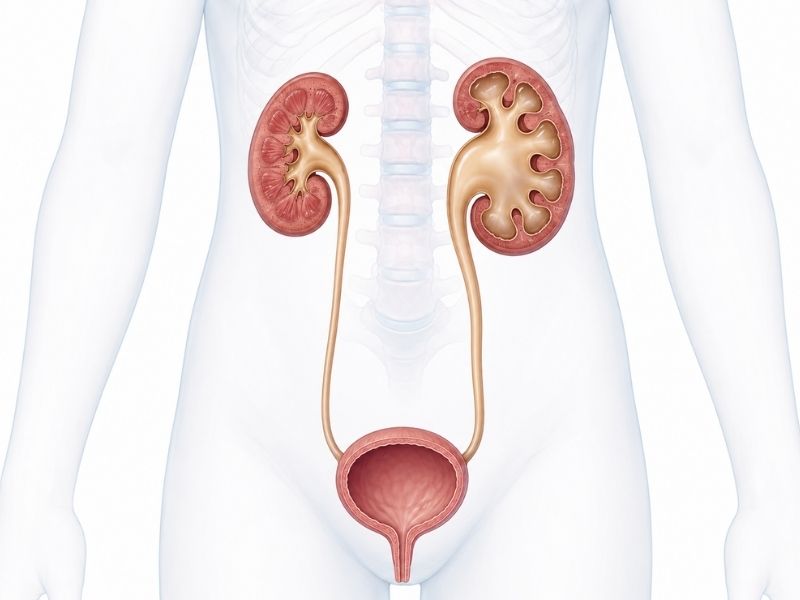
Hydronephrosis is a condition characterized by dilation of the renal pelvis and collecting system, which collect urine inside the kidney. In children, this dilation may be mild, moderate, or severe. Its significance does not depend solely on measurements. Whether it affects one or both kidneys, increases over time, affects kidney tissue, or is associated with urinary tract infections must all be considered. In some children, the dilation may be temporary and decrease during follow-up. In others, an underlying cause may be present, such as an obstruction that restricts urine flow or the backward flow of urine from the bladder toward the kidney. Therefore, kidney dilation is not a diagnosis in itself but a finding that requires investigation and monitoring.

Kidney Dilation in Babies
Kidney dilation in babies is often detected during prenatal ultrasound examinations or postnatal checkups. Some cases detected during pregnancy may improve after birth because the baby's urinary system continues to develop. Regular ultrasound monitoring may be sufficient for mild dilation. However, if the dilation is significant, affects both kidneys, is accompanied by a urinary tract infection, or involves thinning of kidney tissue, a more detailed evaluation is necessary. When kidney dilation is diagnosed in an infant, the follow-up plan is determined according to the child's age, ultrasound findings, and accompanying symptoms. It is important for families to attend scheduled appointments so that changes in the dilation can be monitored.
Why Does Kidney Dilation Occur Before Birth?
Fetal kidney dilation may be detected during prenatal ultrasound examinations when the baby's renal collecting system appears enlarged. Sometimes this is a temporary developmental finding. In other cases, it may be associated with narrowing that restricts urine flow, a problem at the bladder outlet, or backward flow of urine from the bladder toward the kidney. Not every case detected before birth causes serious problems afterward, but reassessment with a postnatal ultrasound is necessary. The degree of dilation, whether it affects one or both kidneys, and whether it increases during pregnancy are important for follow-up. Postnatal examinations help determine whether the dilation persists and whether the baby's kidney function is affected.
What Causes Kidney Dilation in Children?
The answer to what causes kidney dilation may vary according to the child's age, ultrasound findings, and the severity of dilation. Commonly investigated causes include narrowing at the outlet of the kidney, narrowing where the ureter enters the bladder, backward flow of urine from the bladder toward the kidney, and conditions that obstruct urine flow at the bladder outlet. Some children may also have temporary dilation without a significant obstruction. Ultrasound measurements alone may not be sufficient to establish the cause. The child's infection history, urine tests, kidney function, and additional imaging when necessary should be assessed together. Whether treatment is required depends on the underlying cause and the extent of kidney involvement.
Possible causes of kidney dilation include:
Narrowing that restricts urine flow at the kidney outlet
Narrowing where the ureter enters the bladder
Backward flow of urine due to vesicoureteral reflux
Problems affecting urine flow at the bladder outlet
Temporary or mild developmental dilation
Conditions associated with recurrent febrile urinary tract infections
What Are the Symptoms of Kidney Dilation?
Symptoms of kidney dilation do not appear in the same way in every child. Mild dilation detected during pregnancy or infancy may cause no symptoms at all. Some children may experience febrile urinary tract infections, discomfort during urination, foul-smelling urine, abdominal or flank pain, vomiting, feeding difficulties, or slower growth and development. Older children may report burning during urination, frequent urination, or pain in the side of the body. However, these findings are not specific to kidney dilation and may also occur with other urinary tract conditions. It is therefore not appropriate to assess the condition based solely on whether symptoms are present. Ultrasound findings, urine test results, and the child's overall condition should be evaluated together to establish a follow-up plan.
Is Kidney Dilation Always Dangerous?
Kidney dilation is not always dangerous. Mild dilation may decrease as some children grow and may require only regular ultrasound monitoring. However, severe or increasing dilation, thinning kidney tissue, reduced kidney function, or recurrent febrile urinary tract infections require closer evaluation. The seriousness of the dilation is therefore determined not by a single ultrasound result but also by how the condition changes over time. It is understandable for families to be concerned when told that kidney dilation is present. What matters most, however, is identifying its cause and determining whether it is damaging the kidney. Regular follow-up helps avoid unnecessary interventions while allowing conditions requiring treatment to be detected early.
| Area of Evaluation | Mild Dilation | Severe Dilation |
|---|---|---|
| Follow-up approach | May be monitored with regular ultrasound examinations. | More detailed investigation may be required. |
| Symptoms | Many children may have no symptoms. | Infection or pain may occur. |
| Kidney involvement | Significant kidney impairment is generally not expected. | Kidney function must be evaluated. |
| Need for treatment | Treatment is not always necessary; monitoring may be sufficient. | Treatment may be planned according to the underlying cause. |
How Is Kidney Dilation Diagnosed in Children?
Ultrasound is the primary examination method for kidney dilation. It can show enlargement of the urine-collecting structures in the kidney, the thickness of kidney tissue, whether one or both kidneys are affected, and certain findings involving the bladder. However, ultrasound alone may not always explain the cause. When necessary, urine tests, urine cultures, blood tests, assessments of kidney function, or specialized imaging examinations may be requested. If urine is suspected of flowing backward from the bladder toward the kidney, a special imaging examination performed during urination may be needed. Renal scintigraphy may be used to assess kidney function and the possibility of an obstruction to urine flow. The required tests depend on the degree of dilation, the child's age, and the history of infections.
Can Kidney Dilation Resolve on Its Own?
Some mild cases of kidney dilation, particularly in infancy, may decrease or resolve completely during follow-up. This is often related to the development of the urinary tract. However, it is not correct to assume that every case will resolve spontaneously. If the dilation is caused by significant narrowing or backward urine flow, simply waiting may not be appropriate. Therefore, even when improvement is possible, monitoring should take place under medical supervision. Families should not discontinue follow-up appointments even if ultrasound shows reduced dilation, because some changes become apparent only over time. The monitoring plan is based on the degree of dilation, the child's age, urinary tract infection history, and kidney function.
Does Kidney Dilation in Children Require Treatment?
Hydronephrosis in children does not always require medication or surgery. Treatment decisions are based on the degree of dilation, underlying cause, kidney function, infection history, and changes observed during follow-up. Ultrasound monitoring alone may be sufficient for mild dilation. Preventive measures may be considered for certain children at risk of urinary tract infections. If significant narrowing, progressive dilation, or reduced kidney function is present, more advanced treatment options may be considered. The aim is to prevent kidney damage while avoiding unnecessary treatment. Because every child's condition is different, even two children with similar ultrasound findings may require different monitoring or treatment plans. Therefore, decisions should be individualized following a pediatric urology assessment.
When Might Surgery Be Considered?
Surgery is not necessary for every child with kidney dilation. However, certain findings may warrant surgical assessment. Surgical options may be considered if there is significant urinary tract narrowing, declining kidney function, increasing dilation during follow-up, thinning kidney tissue, frequent recurrent febrile urinary tract infections, or findings affecting the child's general health. If a urinary tract obstruction significantly restricts the flow of urine from the kidney to the bladder, kidney damage may develop over time. Therefore, the decision to operate depends not only on the degree of dilation but also on kidney function and changes observed during follow-up. The goal of surgery is to improve urine flow and help preserve kidney function. The final treatment plan is determined according to the child's assessment results.

How Are Children With Kidney Dilation Monitored?
Follow-up for children with kidney dilation is planned following a pediatric urology assessment. Ultrasound is the most commonly used monitoring method, although urine tests, blood tests, and specialized examinations of kidney function may also be requested when necessary. The interval between follow-up appointments depends on the child's age, severity of dilation, infection history, and changes observed during previous examinations. Ultrasound every few months may be sufficient for some children, while others require closer monitoring. Families should observe episodes of fever, urination patterns, changes in urine odor or color, and complaints of pain. Regular monitoring makes it possible both to safely observe dilation that may resolve spontaneously and to identify conditions requiring treatment in a timely manner.
When Should Families Seek Medical Attention?
Certain symptoms in children with kidney dilation should be evaluated without delay. Medical attention should be sought in cases of febrile urinary tract infection, foul-smelling urine, crying or straining during urination, abdominal or flank pain, vomiting, feeding difficulties, irritability, slow weight gain, or blood in the urine. Symptoms in infants may not always be clear. Unexplained fever, refusal to feed, irritability, or vomiting may be associated with a urinary tract infection. Older children may describe pain or urinary symptoms more clearly. Families should not postpone evaluation on the assumption that these symptoms will simply pass. Early assessment of infections and conditions affecting urine flow helps ensure that follow-up and treatment are planned appropriately.
You can also read our article on the treatment of kidney stones in children.
Frequently Asked Questions About Kidney Dilation in Children
At What Measurement in Millimeters Does Kidney Dilation in a Baby Become Significant?
The significance of the measurement varies depending on the baby's gestational age, age after birth, and whether the dilation affects one or both kidneys. Therefore, decisions are not based solely on the measurement in millimeters; ultrasound findings are evaluated together.
Does Kidney Dilation Cause Pain in Children?
Most children with mild dilation may not experience pain. However, severe dilation, infection, or significant difficulty with urine flow may cause abdominal or flank pain.
Can a Baby With Kidney Dilation Be Born Vaginally?
Many babies diagnosed with kidney dilation before birth can be delivered vaginally. The mode of delivery is determined primarily by the overall assessment of the pregnancy and childbirth rather than kidney dilation itself.
Can Kidney Dilation Cause Urinary Tract Infections?
In some children with kidney dilation, the risk of infection may increase when urine flow is impaired. If a urinary tract infection accompanied by fever develops, evaluation by a pediatric urology specialist is important.
Which Doctor Should Be Consulted for Kidney Dilation in Children?
Evaluation by a pediatric urologist or urology specialist is appropriate for kidney dilation in children. The follow-up plan is prepared according to ultrasound findings and the child's overall condition.
Can Kidney Dilation Detected Before Birth Resolve After Delivery?
Some mild cases of kidney dilation may decrease during follow-up after birth. However, because spontaneous resolution cannot be expected in every baby, a postnatal ultrasound examination should be performed.
What Precautions Should Be Taken for a Child With Kidney Dilation?
Families should pay attention to symptoms such as fever, foul-smelling urine, difficulty urinating, abdominal or flank pain, and vomiting. Attending scheduled follow-up appointments is essential for monitoring kidney health.